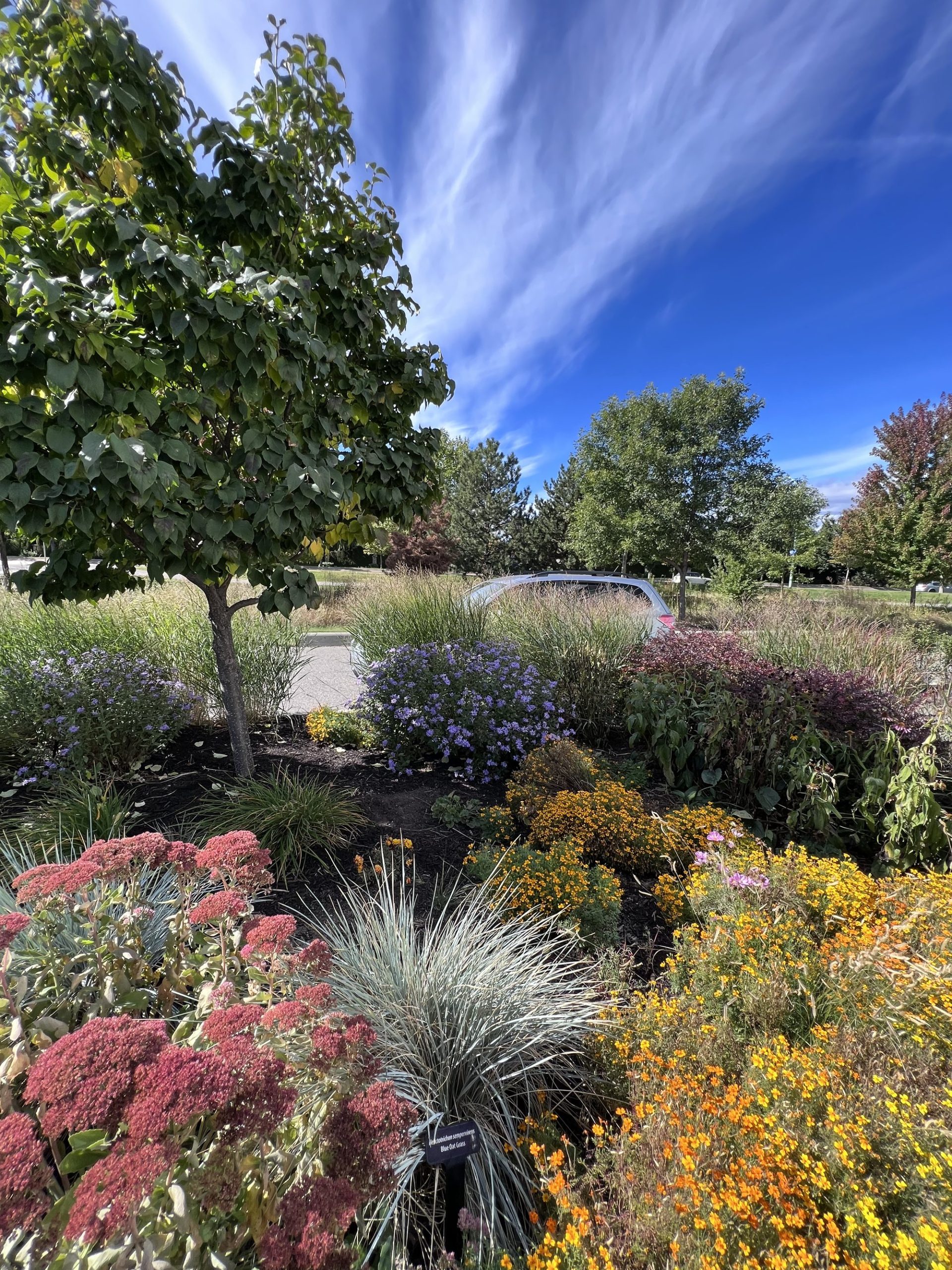
The best fall blooming perennials are asters, goldenrod, sedum ‘Autumn Joy’, Japanese anemone, monkshood, sneezeweed, and hardy mums. Most of them flower from August into October, and a few, like aromatic aster and azure monkshood, keep going into November. Many are hardy to zone 3 or 4, so cold gardens can have color right up to hard frost.
Below is a quick table of 26 fall bloomers with zones, height, bloom time, sun, and pollinator value. Short profiles follow, then cold-hardy picks for zones 3 to 5, care tips, and answers to common questions.

Fall blooming perennials chart
Zones are USDA hardiness zones. Bloom times come from plant records in the Midwest and Southeast US, so expect some shift in your garden. “Not listed” means the sources I checked did not record pollinator visits for that plant.
| Plant | Latin name | Zones | Height | Bloom time | Sun | Pollinator value |
|---|---|---|---|---|---|---|
| New England aster | Symphyotrichum novae-angliae | 4 to 8 | 3 to 6 ft (90 to 180 cm) | Aug to Oct | Full sun to part shade | High: bees, hover flies, monarchs, specialist bees |
| Aromatic aster | Symphyotrichum oblongifolium | 3 to 8 | 1 to 3 ft (30 to 90 cm) | Sep to Nov | Full sun | Butterflies, birds |
| Smooth aster | Symphyotrichum laeve | 3 to 8 | 2 to 4 ft (60 to 120 cm) | Sep to Oct | Full sun | Butterflies |
| Rough goldenrod ‘Fireworks’ | Solidago rugosa | 4 to 8 | 3 to 3.5 ft (90 to 105 cm) | Sep to Oct | Full sun | High: bees, butterflies, specialist bees |
| Garden mum ‘Hillside Sheffield Pink’ | Chrysanthemum hybrid | 5 to 9 | 2 to 3 ft (60 to 90 cm) | Sep to frost | Full sun | Not listed |
| Japanese anemone | Anemone × hybrida | 4 to 8 | 3 to 4 ft (90 to 120 cm) | Aug to Oct | Full sun to part shade | Not listed |
| Grapeleaf anemone | Anemone tomentosa | 4 to 7 | 2 to 4 ft (60 to 120 cm) | Aug to Oct | Full sun to part shade | Butterflies |
| Sedum ‘Autumn Joy’ | Hylotelephium ‘Herbstfreude’ | 3 to 9 | 1.5 to 2 ft (45 to 60 cm) | Sep to Oct | Full sun | Butterflies |
| Spotted Joe Pye weed | Eutrochium maculatum | 3 to 8 | 4 to 7 ft (120 to 215 cm) | Jul to Sep | Full sun | Butterflies, honeybees |
| Toad lily | Tricyrtis hirta | 4 to 8 | 2 to 3 ft (60 to 90 cm) | Aug to Sep | Part shade to full shade | Bees, butterflies, hummingbirds |
| Azure monkshood | Aconitum carmichaelii ‘Arendsii’ | 3 to 7 | 2 to 4 ft (60 to 120 cm) | Oct to Nov | Full sun to part shade | Bumble bees |
| Bugbane | Actaea simplex | 3 to 8 | 3 to 4 ft (90 to 120 cm) | Aug to Sep | Part shade to full shade | Not listed |
| Sneezeweed | Helenium autumnale | 3 to 8 | 3 to 5 ft (90 to 150 cm) | Aug to Oct | Full sun | Butterflies |
| Russian sage | Salvia yangii | 5 to 9 | 3 to 5 ft (90 to 150 cm) | Jul to Oct | Full sun | Bees, butterflies, hummingbirds |
| Pink turtlehead | Chelone lyonii | 3 to 8 | 2 to 4 ft (60 to 120 cm) | Jul to Sep | Full sun to part shade | Butterflies |
| Obedient plant | Physostegia virginiana | 3 to 9 | 3 to 4 ft (90 to 120 cm) | Jun to Sep | Full sun | Bees, butterflies, hummingbirds |
| Black-eyed Susan ‘Goldsturm’ | Rudbeckia fulgida var. sullivantii | 3 to 9 | 2 to 3 ft (60 to 90 cm) | Jun to Sep | Full sun | Butterflies, birds |
| Great blue lobelia | Lobelia siphilitica | 4 to 9 | 2 to 3 ft (60 to 90 cm) | Jul to Sep | Full sun to part shade | Hummingbirds, butterflies |
| Cardinal flower | Lobelia cardinalis | 3 to 9 | 2 to 4 ft (60 to 120 cm) | Jul to Sep | Full sun to part shade | Hummingbirds, butterflies |
| Boltonia ‘Snowbank’ | Boltonia asteroides var. latisquama | 4 to 9 | 3 to 4 ft (90 to 120 cm) | Aug to Sep | Full sun | Butterflies |
| Autumn crocus | Colchicum autumnale | 4 to 8 | 6 to 9 in (15 to 23 cm) | Aug to Sep | Full sun to part shade | Not listed |
| New York ironweed | Vernonia noveboracensis | 5 to 9 | 4 to 6 ft (120 to 180 cm) | Aug to Sep | Full sun | High: butterflies, bees, a specialist bee |
| Leadwort | Ceratostigma plumbaginoides | 5 to 9 | 9 to 12 in (23 to 30 cm) | Jul to Sep | Full sun to part shade | Butterflies, hummingbirds |
| Swamp sunflower | Helianthus angustifolius | 5 to 9 | 5 to 8 ft (150 to 245 cm) | Jul to frost | Full sun to part shade | High: pollinators, specialist bees |
| Anise hyssop ‘Blue Fortune’ | Agastache ‘Blue Fortune’ | 5 to 9 | 2 to 3 ft (60 to 90 cm) | Jul to Sep | Full sun | Butterflies |
| Pink muhly grass | Muhlenbergia capillaris | 5 to 11 | 2 to 3 ft (60 to 90 cm) | Sep to Nov | Full sun to part shade | Butterflies |
Why grow perennials that bloom in fall
Fall flowers feed insects at a time when most summer flowers are done. The Xerces Society notes that adult monarchs need nectar during fall migration, and that a shortage of nectar plants at any point may cut the number of monarchs that reach their overwintering sites. Asters and goldenrod also support specialist bees. NC State Extension lists six specialist bees for Symphyotrichum asters and ten for Solidago goldenrods.
Fall bloomers also keep color in your beds after summer perennials finish. If you also want annuals and shrubs for autumn color, see my list of 15 fall flowers.
Profiles of 26 fall blooming perennials
1. New England aster (Symphyotrichum novae-angliae)
This native aster grows 3 to 6 feet tall with purple, 1.5-inch daisies and yellow centers. It blooms from late August into October. NC State Extension says the flowers draw bees, hover flies, and migrating monarchs. It is also a host plant for pearl crescent caterpillars. Tall stems can flop, so pinch them back a few times before mid-July for a shorter, sturdier plant. My guide on how to grow asters covers planting and care in detail.

2. Aromatic aster (Symphyotrichum oblongifolium)
Aromatic aster blooms late. Its flowers open blue to purple from September into November. Plants stay 1 to 3 feet tall and handle drought, clay, and rocky soil. ‘October Skies’ is one named cultivar. Taller plants may need support when the blooms get heavy. It is hardy to zone 3.
3. Smooth aster (Symphyotrichum laeve)
Smooth aster has violet to purple flowers with yellow centers. It grows 2 to 4 feet tall and blooms in September and October. It likes dry to medium, well-drained soil in full sun, and it tolerates drought. It self-seeds with ease, so deadhead if you want fewer seedlings. Hardy to zone 3.
4. Rough goldenrod ‘Fireworks’ (Solidago rugosa)
‘Fireworks’ carries sprays of yellow flowers in September and October. It reaches 3 to 3.5 feet and handles clay and wet soil. Deer tend to leave it alone. It spreads, so plan to divide it every 2 to 3 years. Goldenrod gets blamed for hay fever, but Clemson Extension says ragweed is the real cause. Goldenrod pollen is heavy and travels on insects, not the wind.
5. Hardy garden mum ‘Hillside Sheffield Pink’ (Chrysanthemum hybrid)
This mum has apricot-pink daisies with gold centers. It blooms from September until frost and grows 2 to 3 feet tall. It wants fertile, moist, well-drained soil in full sun. The Missouri Botanical Garden rates it for zones 5 to 9 and notes that deer and rabbits tend to skip it. Pinch the stems several times before mid-July for a bushier plant. See my post on fall mums for more varieties.
6. Japanese anemone (Anemone × hybrida)
Japanese anemones carry pink or white flowers on tall stems from August to October. ‘Honorine Jobert’ is a white form that reaches 3 to 4 feet. It does best in part shade and well-drained soil, and it may need staking. Deer tend to avoid it. NC State Extension lists contact dermatitis as a risk, so wear gloves when you cut it back.

7. Grapeleaf anemone (Anemone tomentosa)
Grapeleaf anemone is a close relative of the Japanese anemone. It is often sold as ‘Robustissima’. It blooms pink from August to October and grows 2 to 4 feet tall. It likes rich, evenly moist, well-drained soil in sun or part shade. Deer and rabbits tend to leave it alone. The Missouri Botanical Garden lists it for zones 4 to 7.
8. Sedum ‘Autumn Joy’ (Hylotelephium ‘Herbstfreude’)
‘Autumn Joy’ forms a 1.5 to 2 foot mound of fleshy leaves. Its flat flower heads open rosy pink in September and age to red in October. It handles drought, clay, and rocky soil, and it is hardy to zone 3. Pinch it in spring for thicker, bushier stems that do not flop open.

9. Spotted Joe Pye weed (Eutrochium maculatum)
Joe Pye weed is a tall native for the back of the border. It grows 4 to 7 feet tall with domes of purple-pink flowers from July into September. It wants moist, fertile soil that does not dry out. NC State Extension lists it for zones 3 to 8 and says it attracts butterflies and honeybees. Deer tend to leave it alone.
10. Toad lily (Tricyrtis hirta)
Toad lily blooms in shade. Its small white to pale lilac flowers are heavily spotted with purple. They open in August and September on 2 to 3 foot stems. It needs moist, rich, slightly acidic soil that never dries out. Bees, butterflies, and hummingbirds visit the flowers.
11. Azure monkshood (Aconitum carmichaelii ‘Arendsii’)
Azure monkshood is the latest bloomer on this list. Its hooded blue flowers open in October and November on 2 to 4 foot stems. It is hardy to zone 3 and deer leave it alone. Brooklyn Botanic Garden says monkshoods depend on bumble bees for pollination. All parts of the plant are poisonous, roots and seeds most of all. Wear gloves and keep it away from children and pets.
12. Bugbane (Actaea simplex)
Bugbane sends up tall spikes of white flowers in late summer and early fall. The cultivar ‘Brunette’ grows 3 to 4 feet tall. It wants part to full shade, steady moisture, and shelter from strong wind. It is hardy to zone 3. NC State Extension rates it as poisonous if eaten, with the roots and berries the most toxic.
13. Sneezeweed (Helenium autumnale)
Sneezeweed is a native with yellow daisies from August to October. Plants reach 3 to 5 feet and like medium to wet soil in full sun. Cut them back in early June to cut height and get more branches and blooms. Hardy to zone 3, and deer tend to avoid it.
14. Russian sage (Salvia yangii)
Russian sage was long sold as Perovskia atriplicifolia. It now goes by Salvia yangii. It makes a haze of lavender-blue flowers from July to October on 3 to 5 foot stems. It does best in dry, sunny spots and tolerates deer, rabbits, and drought. Cut it back almost to the ground in late winter or early spring as soon as new growth shows. Rated for zones 5 to 9.
15. Pink turtlehead (Chelone lyonii)
Turtlehead gets its name from pink flowers shaped like a turtle’s head. It blooms from July into September and grows 2 to 4 feet tall. It likes moist, rich soil and tolerates close to full shade. It is a good fit for a wet corner. Hardy to zone 3.
16. Obedient plant (Physostegia virginiana)
Obedient plant has spikes of pink or white flowers. The species blooms from June to September and grows 3 to 4 feet tall. NC State Extension says it attracts bees, butterflies, and hummingbirds. The Missouri Botanical Garden warns the species can be an aggressive spreader, so give it room or edge it. Hardy to zone 3.
17. Black-eyed Susan ‘Goldsturm’ (Rudbeckia fulgida var. sullivantii)
‘Goldsturm’ carries 3 to 4 inch golden daisies with black centers from June into September. It grows 2 to 3 feet tall and handles drought, clay, and city conditions. Deadhead to get more flowers, or leave the seed heads for birds. Hardy to zone 3.
18. Great blue lobelia (Lobelia siphilitica)
Great blue lobelia has dense spikes of blue tubular flowers from July to September. It grows 2 to 3 feet tall in moist to wet soil. The Missouri Botanical Garden lists it as tolerant of heavy shade and wet soil. It may self-seed where it is happy. Rated for zones 4 to 9.
19. Cardinal flower (Lobelia cardinalis)
Cardinal flower has scarlet spikes that draw hummingbirds. It blooms from July to September and grows 2 to 4 feet tall in moist soil. It is a short-lived perennial, so let some seed heads ripen to replace older plants. The Missouri Botanical Garden suggests a winter mulch in cold climates. Hardy to zone 3.
20. Boltonia ‘Snowbank’ (Boltonia asteroides var. latisquama)
Boltonia carries masses of small white daisy flowers. ‘Snowbank’ grows 3 to 4 feet tall and blooms in August and September. It grows in average soil in full sun and tolerates clay and wet soil. Rated for zones 4 to 9.
21. Autumn crocus (Colchicum autumnale)
Autumn crocus grows from a corm and sends up lavender-pink flowers in late summer and early fall. The flowers are only 6 to 9 inches tall. Plant dormant corms in August, 3 inches (7.5 cm) deep and 6 inches (15 cm) apart. Every part is toxic and can be fatal if eaten, per NC State Extension. Rated for zones 4 to 8.
22. New York ironweed (Vernonia noveboracensis)
Ironweed is a tall native with purple flower clusters in August and September. It grows 4 to 6 feet tall in medium to wet soil and full sun. NC State Extension says it feeds butterflies and bees, supports a specialist bee, and its dead stems house stem-nesting bees. Cut off flower heads before they set seed if you do not want seedlings. Rated for zones 5 to 9.
23. Leadwort (Ceratostigma plumbaginoides)
Leadwort is a 9 to 12 inch ground cover with deep blue flowers from July to September. It spreads by rhizomes and tolerates clay soil and erosion-prone slopes. It grows in average, well-drained soil in sun or part shade. NC State Extension notes it can cause skin irritation, so wear gloves. Rated for zones 5 to 9.
24. Swamp sunflower (Helianthus angustifolius)
Swamp sunflower grows 5 to 8 feet tall and covers itself in 2 to 3 inch yellow daisies from late summer until frost. It likes moist soil in sun or part shade. Prune it back in June for more branches, and stake it in windy spots. NC State Extension lists it for zones 5 to 9 and says it supports specialist bees.
25. Anise hyssop ‘Blue Fortune’ (Agastache ‘Blue Fortune’)
‘Blue Fortune’ has 4-inch spikes of lavender-blue flowers from July to September. It grows 2 to 3 feet tall in full sun. Good drainage matters most, since wet soil causes crown and root rot. Deadhead for more blooms. Deer tend to avoid it. Rated for zones 5 to 9.
26. Pink muhly grass (Muhlenbergia capillaris)
Pink muhly is a warm-season grass with airy pink to pinkish-red flower heads from September to November. It grows 2 to 3 feet tall in sandy or rocky, well-drained soil. It handles drought and poor soil. Songbirds eat the seeds. The Missouri Botanical Garden rates it for zones 5 to 11.
Cold-hardy fall perennials for zones 3 to 5
I garden in the North Okanagan of British Columbia, around zone 5b. Cold-climate gardeners need plants that survive winter and still bloom before hard frost. Here is how the list sorts out by the lowest zone in its rating. These are USDA zones. Canada has its own hardiness map at Canada’s Plant Hardiness Site, so check which system a plant tag uses.
Hardy to zone 3
- Aromatic aster (blooms latest of the asters, into November)
- Smooth aster
- Sedum ‘Autumn Joy’
- Spotted Joe Pye weed
- Azure monkshood (October and November)
- Bugbane (for shade)
- Sneezeweed
- Pink turtlehead
- Obedient plant
- Black-eyed Susan ‘Goldsturm’
- Cardinal flower (add winter mulch)
Hardy to zone 4
- New England aster
- Rough goldenrod ‘Fireworks’
- Japanese anemone and grapeleaf anemone
- Toad lily
- Great blue lobelia
- Boltonia ‘Snowbank’
- Autumn crocus
Hardy to zone 5
- Hardy mum ‘Hillside Sheffield Pink’
- Russian sage
- New York ironweed
- Leadwort
- Swamp sunflower
- Anise hyssop ‘Blue Fortune’
- Pink muhly grass
Plants at the edge of their range need extra help. Plant zone 5 perennials in spring so the roots have a full season to settle in. Give them a sheltered, well-drained spot. After the ground freezes, add mulch over the crowns. My guide on how to winterize perennials walks through each step.
Fall perennials for shade, wet soil, and dry soil
| Site | Best picks from this list |
|---|---|
| Part to full shade | Toad lily, bugbane, pink turtlehead, great blue lobelia, Japanese anemone |
| Wet or heavy soil | Joe Pye weed, sneezeweed, turtlehead, both lobelias, ironweed, swamp sunflower, ‘Fireworks’ goldenrod, boltonia |
| Dry, sunny spots | Aromatic aster, smooth aster, sedum ‘Autumn Joy’, Russian sage, ‘Goldsturm’, pink muhly grass |
| Deer pressure | ‘Fireworks’ goldenrod, mums, both anemones, Joe Pye weed, monkshood, sneezeweed, Russian sage, turtlehead, obedient plant, ‘Goldsturm’, both lobelias, ironweed, ‘Blue Fortune’ |
| Latest color (into November) | Aromatic aster, azure monkshood, pink muhly grass, hardy mums, swamp sunflower |
How to plant and care for fall blooming perennials
- Plant in spring. University of Maryland Extension says perennials that flower in late summer or fall often transplant with less setback in spring. Spring planting also gives roots a full season before winter.
- Match the plant to the site. Use the sun column in the chart and the site table above. Wet-soil plants like Joe Pye weed struggle in dry ground. Russian sage and anise hyssop can rot in wet ground.
- Pinch tall plants early. Pinch mums and asters several times before mid-July, starting when each stem has a few sets of leaves. This gives shorter, sturdier plants. Pinching delays bloom, so pinch only some stems to spread out the flowers.
- Cut back a few in June. Sneezeweed and swamp sunflower respond well to a June cutback. They branch more and stay shorter.
- Leave stems up over winter. Standing stems and seed heads feed birds and shelter overwintering pollinators. Cut back in spring instead, except around plants that had serious disease.
- Mulch after frost. Once frost arrives, spread about 1 inch (2.5 cm) of mulch around the plants.
- Divide in early spring. Fall bloomers are usually divided in early spring, which gives them a full season to recover before they flower.
Perennials can take about three years after planting to fill in and look full, per University of Maryland Extension. If you are adding perennials this autumn, see my list of perennial flowers to plant in fall.
Common problems with fall perennials
| Problem | Likely cause | Fix |
|---|---|---|
| Tall asters and mums flop over | Tall stems that were not pinched | Pinch several times before mid-July. Stake or grow through a ring support. |
| Sedum splits open in the middle | Heavy flower heads on soft stems | Pinch in spring for thicker, bushier stems. |
| Plant spreads too far | Rhizomes or self-seeding (obedient plant, ‘Fireworks’, smooth aster, ironweed) | Divide every 2 to 3 years. Deadhead before seeds form. |
| Agastache or Russian sage dies over winter | Wet soil causing crown or root rot | Move to a sharply drained, sunny spot. |
| Cardinal flower does not return | Short-lived plant, cold winter | Let it self-seed and add winter mulch. |
| Frost hits before bloom | Late bloomer in a short season | Pick plants with earlier bloom times from the chart, or a warm, south-facing spot. |
Fall blooming perennials FAQ
What perennial blooms the latest in fall?
Azure monkshood blooms in October and November. Aromatic aster and pink muhly grass flower from September into November. Hardy mums and swamp sunflower bloom until frost.
What fall perennials grow in shade?
Toad lily and bugbane bloom in part to full shade. Pink turtlehead, great blue lobelia, and Japanese anemone handle part shade.
What are the best fall perennials for pollinators?
Asters and goldenrod top the list. NC State Extension records specialist bees for both, plus monarch visits to New England aster. Ironweed and swamp sunflower also support specialist bees.
Does goldenrod cause hay fever?
No. Clemson Extension says ragweed causes fall hay fever. Goldenrod pollen is large and heavy and moves on insects. Ragweed pollen is light and blows for miles. Read Clemson’s guide to goldenrod and ragweed to tell them apart.
When should I plant fall blooming perennials?
Spring is best. Fall bloomers transplant with less setback in spring, and they get a full season to root before winter.
Should I cut back fall perennials after they bloom?
You can leave them standing until spring. The stems and seed heads feed birds and shelter overwintering insects. Remove stems from plants that had serious disease.
Which fall perennials are poisonous?
Monkshood, autumn crocus, and bugbane are all toxic if eaten. Japanese anemone and leadwort can irritate skin. Wear gloves and plant them away from areas where children and pets play.
Are mums perennials?
Hardy garden mums are perennials. ‘Hillside Sheffield Pink’ is rated for zones 5 to 9. In colder zones, try aromatic aster or sedum ‘Autumn Joy’ for fall color instead, since both are hardy to zone 3.
Sources
- Missouri Botanical Garden Plant Finder: New England aster (and the Plant Finder records for each plant in the chart)
- NC State Extension Plant Toolbox: New England aster and rough goldenrod
- University of Maryland Extension: Perennials, selection, planting, and care
- Xerces Society: Monarch nectar plant guides
- Brooklyn Botanic Garden: Bumble bees as pollinators
Start with two or three plants from the chart that match your zone and your sunniest or shadiest open spot. Add an aster and a goldenrod for the bees, and one late bloomer like monkshood or aromatic aster. That mix gives you color from August to hard frost.
Where to buy plants online
These nurseries ship well-rooted plants and stand behind them.
- Nature Hills Nursery: the largest online nursery in the US
- Plant Addicts: perennials, shrubs, and trees with a plant guarantee
- Botanical Interests: flower seeds for the beds you plan yourself
Some links earn me a commission at no cost to you. As an Amazon Associate I earn from qualifying purchases.



Leave a Reply