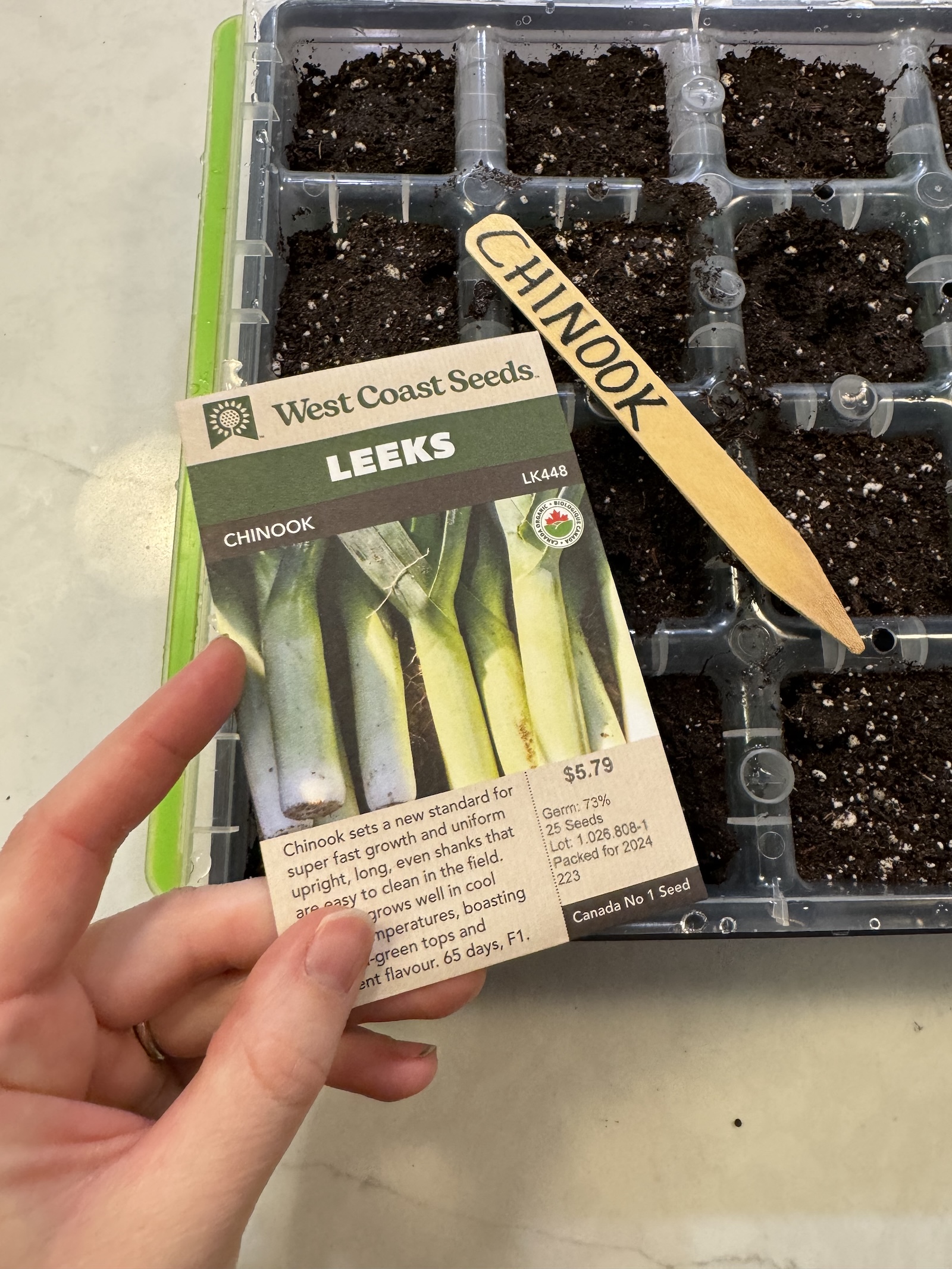
In January, most gardeners in zones 3 to 7 start onions, leeks, and celery indoors, because these slow crops need 10 to 12 weeks of growth before the last spring frost. In zones 8 to 10, January is a planting month: you can start or set out peppers, and you can sow cool-season crops like peas, carrots, radishes, and turnips straight into the garden. Anywhere with a cold winter, you can also winter sow hardy crops like kale and spinach outdoors in milk jugs.
The trick is to count back from your own last frost date, not the calendar. This guide shows what to plant in January for each zone, which seeds go indoors and which go outside, and how many weeks before frost each crop needs.
What to plant in January by zone: quick chart
Your hardiness zone is a good starting point, but the date that matters for seed starting is your average last spring frost. Frost dates shift a lot inside one zone, so look up the date for your own town before you sow. The chart below uses these rough last frost windows for each zone, from American Meadows’ frost date chart:
- Zone 3: May 1 to 16
- Zone 4: April 24 to May 12
- Zone 5: April 7 to 30
- Zone 6: April 1 to 21
- Zone 7: March 22 to April 3
- Zone 8: March 13 to 28
- Zone 9: February 6 to 28
- Zone 10: January 1 to 15
| Crop | How to start | Weeks before last frost | Zones 3 to 4 | Zones 5 to 6 | Zone 7 | Zones 8 to 10 |
|---|---|---|---|---|---|---|
| Onions (bulb) | Indoors | 10 to 12 | Late January to February | Mid-January to mid-February | January | Short-day types go in during fall. Sow green onions now. |
| Leeks | Indoors | 10 to 12 | Late January to February | Mid-January to mid-February | January | Check your local planting guide |
| Celery | Indoors | 10 to 12 | February | Late January to February | January | Set out transplants |
| Sweet and hot peppers | Indoors | 5 to 8 (plants go out 2 to 3 weeks after frost) | Wait until March | February to March | Late January to February | Zone 8: mid-January. Zones 9 to 10: set out plants. |
| Super hot peppers | Indoors | 8 to 12 | February to March | Mid-January to early March | January | December to January, or set out plants |
| Peas, carrots, radishes, turnips | Direct sow | Varies | Wait | Wait | Wait | Sow outside now |
| Kale, spinach, broccoli | Winter sow outdoors | Not counted | January to February | January to February | January to February | Sow in the ground or set out plants |
If your frost date falls at the late end of your zone’s window, start at the later end of the range. For a full list of crops and timing, see my guide on when to start seeds indoors.
How to count back from your last frost date
- Look up the average last spring frost date for your town.
- Find the number of weeks each crop needs indoors (see the chart).
- Count back that many weeks on a calendar. That is your sowing date.
- Write the date on your seed packet or in a garden notebook so you do not miss it.
Here is an example. If your last frost is April 20, onion seeds need 10 to 12 weeks indoors. Twelve weeks before April 20 is January 26. So you would sow onions in the last week of January.
Here in Armstrong, in the North Okanagan of BC, I garden in about zone 5b to 6a. I start onions, leeks, and celery in January or early February. The onions go into my raised beds in early April, celery in mid-May, and peppers at the end of May.
Vegetable seeds to start indoors in January (zones 3 to 7)
In cold zones, the ground is frozen in January. The work happens indoors under lights. These are the crops that need the longest head start.
Onions from seed
Onions are the classic January seed. University of Wisconsin Extension says to sow onion seeds indoors in late January or February, 10 to 12 weeks before the last frost.
- Soil temperature: keep the mix at 70 to 72°F (21 to 22°C) with a heat mat until seedlings come up.
- Days to sprout: 6 to 12 days.
- Growing temperature: 60 to 65°F (16 to 18°C) during the day once they are up.
- Transplant: about 4 weeks before the last frost, once frost is out of the ground. Set plants 1 inch deep and 4 inches apart.
Pick the right day length. Long-day onions need 14 hours of daylight or more to form bulbs, and these are the types for northern gardens. Short-day onions in the north form small bulbs early. Some of my favorite onions to grow from seed are ‘Ailsa Craig’, ‘Kelsae’, and ‘Sweet Spanish’.
Once my onion seedlings reach 3 to 4 inches tall, I trim them back to about half their height with scissors. This keeps them from flopping over and helps build sturdy plants. I keep trimming as they grow. At transplant time, Wisconsin Extension suggests clipping the tops to 5 inches so they do not dry out while the roots settle in.
Onion maggots can be a pest. I cover my onion beds with insect screen after planting to keep the flies off. For the full method, read my post on how to grow onions from seeds, sets, or transplants.
Leeks
Leeks are in the onion family and follow the same schedule. University of Minnesota Extension lists leeks and onions as the first vegetables to start, 14 to 15 weeks before planting out in Minnesota. In milder zones, 10 to 12 weeks is enough.

I sow leeks in trays on a heat mat under a grow light. Once the seedlings look strong, I harden them off by setting the trays outside for an hour a day when it is above freezing. I add more time each day for about a week. Then they go into the garden in early April. Leeks have fewer problems with onion maggots than onions do, but a cover of insect screen still helps.
I like the giant types. They grow into thick, long shanks that fill a soup pot.
Celery
Celery is slow and fussy at the start. Cornell’s growing guide says to start celery inside about 10 to 12 weeks before the last frost.
- Light to sprout: celery seeds need light to germinate. Press them onto the surface and do not bury them.
- Soil temperature: 70 to 75°F (21 to 24°C).
- Days to sprout: 14 to 21 days.
- Growing temperature: 60 to 70°F (16 to 21°C) after it sprouts.
- Spacing in the garden: 6 to 12 inches apart.
Watch the cold. Cornell notes that 10 days of nights below 40°F (4°C) and days below 55°F (13°C) can make celery bolt. Harden it off by cutting back on water, not by leaving it out in the cold. In my garden, celery goes out around mid-May.
I sow celery in trays, then move the seedlings to 3-inch pots when they reach about 3 inches tall. I feed them once a week with a water-soluble fertilizer. Celery has shallow roots, so it needs steady moisture all season or the stalks turn stringy and bitter.
Super hot peppers
Ghost peppers, Carolina Reapers, scorpions, and habaneros are Capsicum chinense types. They sprout slowly and need a long season. Atomic Pepper Seeds says super hots take 2 to 6 weeks to germinate, compared with 1 to 2 weeks for milder peppers. They suggest starting them 8 to 12 weeks before your last frost. In zones 5 to 7, that puts the first sowing in January.
- Soil temperature: 78 to 85°F (25 to 29°C). A heat mat makes the biggest difference.
- Too cold: sprouting stops below about 60°F (15°C).
- Season length: super hots often need 95 to 150 days from transplant to ripe fruit.
I sow them on a heat mat set near 78°F (26°C) under a grow lamp. Once most seedlings are up, I take the trays off the heat. When plants reach 2 to 3 inches tall, I move each one into a 4-inch pot and feed once a week with a water-soluble fertilizer. Peppers stay inside until nights stay above about 46°F (8°C). Here, that means the end of May.
Seeds to start in January in mild zones (zones 7 to 10)
In warm zones, the calendar runs earlier. Your January looks like a northern gardener’s March.
Sweet and hot peppers
Cornell’s pepper guide says to sow pepper seeds 8 to 10 weeks before you plan to transplant, then set plants out 2 to 3 weeks after the average last frost. That means sowing 5 to 8 weeks before your frost date.
- Zone 7: sow in late January to February.
- Zone 8: sow in mid-January to February.
- Zones 9 and 10: seeds sown in December are ready. Central and South Florida gardeners can set out pepper transplants in January, according to UF/IFAS Gardening Solutions.
Pepper seed germinates best at 80°F (27°C) or warmer and will not sprout below 55°F (13°C). Sow 1/4 inch deep. Seedlings come up in 7 to 10 days at a soil temperature near 85°F (29°C). After that, grow them at about 70°F (21°C) by day and 65°F (18°C) at night in strong light. Cornell warns against rushing them outside, since cold can weaken pepper plants for good.
Onions, leeks, and celery in zone 7
With a last frost near the end of March, zone 7 gardeners are right on time for onions, leeks, and celery in early January. Twelve weeks before March 28 is January 3. Start these first, then peppers a few weeks later.
Onions in zones 8 to 10
Southern gardens grow short-day bulb onions, and these go in during fall. The Florida Vegetable Gardening Guide lists bulbing onions from September to December in North Florida, and October in Central and South Florida. In January, sow bunching onions (green onions) from seed instead. They are ready in 50 to 75 days.

Cool-season seeds to sow outside in January (zones 8 to 10)
Mild-winter gardeners can direct sow in January. UF/IFAS lists these January crops for Florida, which covers the warm end of this zone range:
| Region | Sow seeds in January | Set out transplants in January |
|---|---|---|
| North Florida | Carrots, bunching onions, English peas, radishes, turnips | Arugula, beets, broccoli, Brussels sprouts, cabbage, cauliflower, collards, kale, kohlrabi, lettuce, Swiss chard, celery, spinach, potatoes |
| Central Florida | Cantaloupe, carrots, corn, cucumbers, bunching onions, English peas, radishes, squash, turnips, watermelon | All of the above plus eggplant, peppers, tomatoes, tomatillos |
| South Florida | Beans, cantaloupe, carrots, corn, cucumbers, okra, bunching onions, peas, radishes, squash, turnips, watermelon | Eggplant, lettuce, peppers, tomatoes, Swiss chard, celery, potatoes |
Gardeners in other zone 8 to 10 areas, like the Gulf Coast, the low desert, and coastal California, will find similar lists through their local extension office. A few planting details from the Florida guide:
- English peas: sow 1 to 1 1/2 inches deep, 2 to 6 inches apart. Ready in 60 to 80 days.
- Carrots: sow 1/4 inch deep, thin to 1 to 3 inches apart. Ready in 70 to 120 days.
- Radishes: sow 1/4 inch deep, 1 inch apart. Ready in 20 to 30 days.
- Turnips: sow 1/2 inch deep, 2 to 6 inches apart. Ready in 40 to 60 days.
- Celery: sow on the surface (it needs light). Ready in 75 to 90 days.
For more ideas, see my list of cool season vegetables to plant.
Winter sowing vegetables in January
Winter sowing lets you start hardy seeds outside in the cold, with no grow lights. You plant seeds in clear containers that act as tiny greenhouses. Snow and rain water them. The seeds sprout on their own when the weather warms up.
University of Illinois Extension calls January and February prime time for winter sowing. They advise waiting until then, because seeds sown during a warm spell in fall can sprout and then die when it turns cold again.

Best vegetables for winter sowing in January
- Kale
- Spinach
- Broccoli
- Brussels sprouts

These frost-tolerant crops handle the cold. Frost-tender crops like tomatoes and squash need to wait until March or April for winter sowing. My winter sowing guide has more crops and tips.
How to winter sow in milk jugs

- Use a clear or cloudy jug that lets light through. Throw away the cap.
- Cut several drainage holes in the bottom. Illinois Extension also suggests 3 holes on each side.
- Cut around the jug just below the handle. Leave about 1/2 inch uncut as a hinge.
- Fill the bottom with 3 to 4 inches of light, well-drained potting mix. Water it until it feels like a damp sponge.
- Sow seeds. Leave small seeds on the surface. Plant larger seeds at the depth on the packet.
- Close the jug and tape it shut. Label it with the crop and the date.
- Set it outside in a sunny spot out of strong wind, where rain and snow can reach it.
- In spring, open the jug on sunny days and close it at dusk. Transplant when the soil warms.
Seeds that can wait until February or later
Some long-season crops are tempting in January, but most cold-zone gardeners do better to wait. Starting too early gives you tall, root-bound plants long before it is warm enough to plant them out.
- Eggplant: University of Minnesota Extension starts eggplant about 9 weeks before planting out, in mid-March for Minnesota. In my zone 5 garden, eggplant does not go outside until about June 1.
- Tomatoes: 5 to 6 weeks indoors is enough, per Minnesota Extension. That is early April for most northern gardens.
- Broccoli, cabbage, cauliflower, and head lettuce: 10 to 11 weeks indoors, so early March in Minnesota.
- Peanuts: a warm-season crop that needs nights near 50°F (10°C) before going outside. I grow short-season types like ‘Tennessee Red’ and ‘Valencia’ in 12 to 16 inch containers, 3 plants per pot.
My list of vegetable seeds to plant in February picks up where this one leaves off.
January seed starting setup
January days are short and dim in the north. A sunny window alone will not grow sturdy seedlings. These are the basics I use:
- Grow lights: seedlings need 12 to 16 hours of light a day, according to Minnesota Extension. Turn the lights off at night, since plants need a dark period.
- Heat mat: bottom heat speeds up onions, celery, and peppers. Take trays off the heat once most seeds are up.
- Clean trays and fresh seed-starting mix: reused soil can carry disease.
- A small fan: moving air builds sturdier stems and cuts down on disease.
- Weekly feeding: once seedlings have true leaves, I feed with a water-soluble fertilizer once a week.
When plants are ready to go outside, follow my steps on how to harden off seedlings. A cold frame helps bridge the gap between the house and the garden.
Common January seed starting mistakes
| Problem | Likely cause | Fix |
|---|---|---|
| Pepper seeds do not sprout | Soil too cool | Use a heat mat. Peppers will not sprout below 55°F (13°C). Super hots can take up to 6 weeks. |
| Celery seeds do not sprout | Seeds buried too deep | Press seeds onto the surface. They need light to germinate. |
| Tall, floppy seedlings | Too little light | Add a grow light and run it 12 to 16 hours a day. |
| Onion tops fall over | Long, weak leaves | Trim tops back by about half with clean scissors. |
| Celery bolts after planting out | Too many cold nights | Wait until nights stay above 40°F (4°C). Harden off by reducing water. |
| Plants outgrow their pots before frost | Started too early | Count back from your frost date. Move plants into larger pots if needed. |
| Winter-sown seeds sprout and die | Sown in fall during a warm spell | Wait until January or February to sow hardy crops. |
Frequently asked questions
What vegetables can I start indoors in January?
Onions, leeks, and celery are the main ones in zones 3 to 7. Each needs 10 to 12 weeks indoors before the last frost. Super hot peppers can also start in January in zones 5 to 7.
Can I plant vegetable seeds outside in January?
Yes, in zones 8 to 10. Peas, carrots, radishes, turnips, and green onions can go straight into the ground. In colder zones, winter sow hardy crops like kale and spinach in milk jugs.
What seeds can I start in January in zone 5?
Onions, leeks, and celery from mid-January on, plus super hot peppers. Kale, spinach, and broccoli can be winter sown outdoors. Wait until February or March for sweet peppers and eggplant, and until April for tomatoes.
Is January too early to start tomatoes?
Yes, for most gardens. Tomatoes need only 5 to 6 weeks indoors. In zones 9 and 10, central and south Florida gardeners can set out tomato transplants in January.
How long do onion seeds take to sprout?
About 6 to 12 days with the soil kept at 70 to 72°F (21 to 22°C).
Do I need a grow light to start seeds in January?
In northern gardens, yes. Seedlings need 12 to 16 hours of light a day, and January windows cannot supply it.
Can I winter sow tomatoes in January?
Wait. Illinois Extension recommends holding frost-tender crops like tomatoes and squash until March or April for winter sowing.
Why are my pepper seeds not sprouting?
Most often the soil is too cool. Keep it at 80°F (27°C) or a bit warmer. Super hot types can take 2 to 6 weeks, so give them time.
Your next step: find your last frost date, count back 10 to 12 weeks, and mark your onion, leek, and celery sowing days. If you have flower seeds to start too, my list of flower seeds to plant in January pairs well with this one.
Seed companies I like
These are the seed companies I order from for my own garden.
- Botanical Interests: beautiful packets with growing notes printed inside
- High Mowing Organic Seeds: certified organic, grown in Vermont
- True Leaf Market: big selection of hybrids, microgreens, and cover crops
Some links earn me a commission at no cost to you. As an Amazon Associate I earn from qualifying purchases.


Leave a Reply