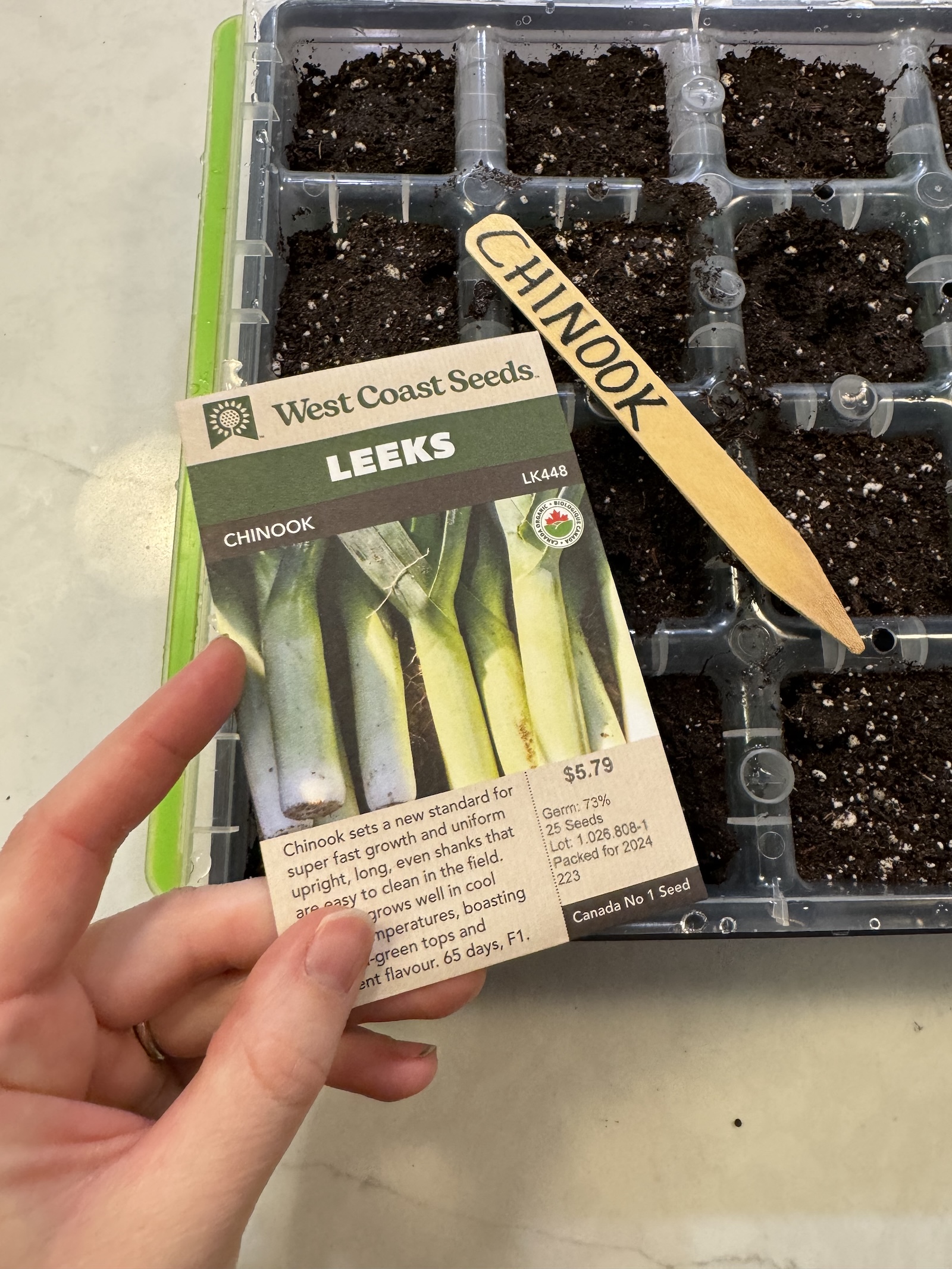
Leeks are one of the easiest and most cold-hardy crops in the onion family. They have a mild, sweet onion flavor and a long white stem that is great in soups, stews, and potato dishes.
Leeks take a long time to grow, but they need little care. Many varieties stand in the garden through fall and into winter, so you can pick them when you need them.
When to plant leeks
Leeks need a long season, often 100 to 120 days or more from transplant. Most gardeners start them indoors.
- Start seeds indoors 10 to 12 weeks before your last spring frost.
- Sow seeds 1/4 inch (6 mm) deep in a tray of seed starting mix.
- Keep them under bright lights.
- Trim the tops back to about 4 to 5 inches (10 to 13 cm) as they grow. This keeps the seedlings sturdy.
- Harden off the seedlings and plant them out around your last frost date, when they are about as thick as a pencil.
In mild zones, you can also sow leeks outdoors in spring for a winter harvest.
Where to plant leeks
- Full sun, at least 6 hours a day
- Rich, loose soil with lots of compost
- Steady moisture
Leeks are heavy feeders. Work plenty of compost into the bed before planting.
How to plant leeks
The trick to long, white leeks is planting them deep. The part of the stem kept out of the sun stays white and tender. This is called blanching.
The dibber method
- Use a dibber or a thick stick to make holes about 6 inches (15 cm) deep.
- Space the holes 6 inches (15 cm) apart, in rows 12 to 18 inches (30 to 45 cm) apart.
- Drop one seedling into each hole, so only the top few inches stick out.
- Fill each hole with water. Do not fill it with soil.
The water settles soil around the roots. Over the next few weeks, the holes fill in as you water and weed.
The trench method
Dig a trench about 6 inches (15 cm) deep. Set the seedlings in the bottom, 6 inches apart, and cover the roots. As the leeks grow, fill in the trench a little at a time.
How to blanch leeks
As the leeks grow, pile soil, straw, or shredded leaves around the stems every few weeks. This keeps more of the stem white.
Keep soil out of the place where the leaves fan out. Soil that falls in there is hard to wash out later.
Water and feeding
Give leeks about 1 inch (2.5 cm) of water a week. Dry soil makes them tough. A layer of mulch holds moisture in and keeps weeds down. Leeks do not compete well with weeds, so keep the bed weeded.
Side-dress with compost or a nitrogen-rich fertilizer like fish emulsion once or twice in summer.
How to harvest leeks
Start picking leeks once the stems are about 1 inch (2.5 cm) thick. Early varieties can be ready in late summer. Most leeks are picked in fall and early winter.
- Loosen the soil beside the leek with a garden fork.
- Pull the leek straight up.
- Trim off the roots and the tough tops of the leaves.
Do not yank them. Leeks have deep roots and can snap off.
Leeks are cold hardy. Many varieties can stay in the ground well into winter. In cold zones, cover them with a thick layer of straw so you can still dig them when the ground starts to freeze.
How to clean leeks
Leeks trap soil between their layers. Cut off the roots and the dark green tops. Slice the leek in half from top to bottom. Rinse each half under running water, fanning the layers apart.
How to store leeks
Store unwashed leeks in a bag in the fridge for 1 to 2 weeks. For longer storage, leave them in the garden under mulch and dig them as you need them. You can also slice and freeze them for soups.
Best leek varieties
| Variety | Type | Notes |
|---|---|---|
| ‘King Richard’ | Summer leek | Fast, long white stems, less cold hardy |
| ‘American Flag’ | Heirloom | Also sold as ‘Broad London’, hardy and reliable |
| ‘Bandit’ | Winter leek | Thick stems, blue-green leaves, cold hardy |
| ‘Tadorna’ | Winter leek | Blue-green leaves, stands well in fall |
Common leek problems
- Thin, weak leeks. They need more water, more food, or more time. Plant deeper and feed in summer.
- Silvery streaks on leaves. These are from onion thrips. Spray them off with water and keep plants watered.
- Orange spots on leaves. This is leek rust, a fungus. Give plants more space and remove spotted leaves.
- A hard stalk in the middle. The leek is starting to flower. Pick it right away and use the outer layers.
Leeks are biennials. If you leave a leek in the ground over winter, it sends up a tall stalk with a round purple flower the next summer. Pollinators love it.
More onion family crops
- How to grow onions from seeds, sets, or transplants
- How to grow garlic
- How to grow alliums for flowers
Seed companies I like
These are the seed companies I order from for my own garden.
- Botanical Interests: beautiful packets with growing notes printed inside
- High Mowing Organic Seeds: certified organic, grown in Vermont
- True Leaf Market: big selection of hybrids, microgreens, and cover crops
Some links earn me a commission at no cost to you. As an Amazon Associate I earn from qualifying purchases.



Leave a Reply