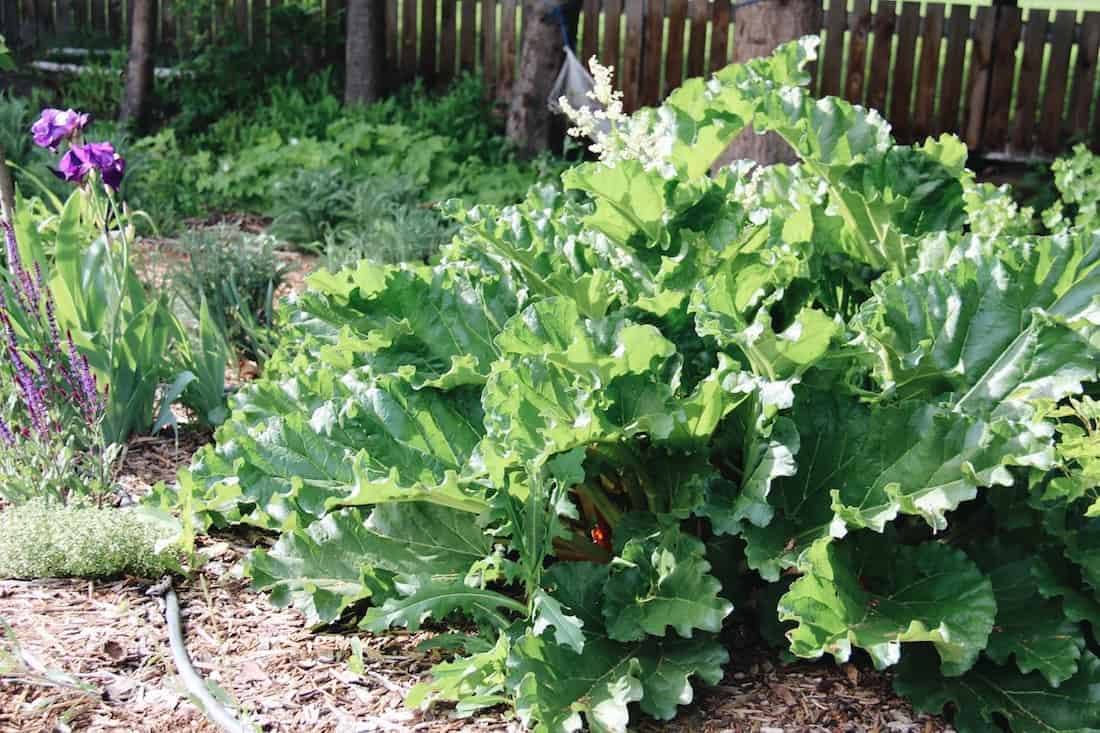
Plant rhubarb crowns in early spring, as soon as the soil can be worked. Set each crown with its buds 1 to 2 inches (2.5 to 5 cm) below the surface. Space plants 3 to 4 feet (90 to 120 cm) apart in full sun and rich, well-drained soil. Do not harvest the first year. Pick a few stalks the second year. From the third year on, pull stalks for 8 to 10 weeks each spring, then stop and let the plant rest. The leaves are poisonous, so eat only the stalks.
Rhubarb (Rheum rhabarbarum) is a perennial. One well-placed plant can keep producing for 10 years or more, so the spot you pick now matters.
Where rhubarb grows best
Rhubarb loves cold winters. It needs a stretch of cold, below about 40°F (4°C), to break dormancy and grow well in spring. It thrives in zones 3 to 8. In the hot South, it struggles and often grows as a short-lived plant at best. Not sure of your zone? My guide on how to find your growing zone shows how to check.
Pick a spot with full sun, at least six hours a day. In warm areas, afternoon shade helps. Choose a corner of the garden where it can stay for years and will not be in the way when you till. A mature plant spreads 3 to 4 feet (90 to 120 cm) wide.
Choose a variety
Stalk color is about looks and sweetness, not ripeness. Green stalks are as safe to eat as red ones.
- ‘Canada Red’ has deep red stalks and a sweeter, less sour flavor.
- ‘Valentine’ grows thick red stalks that hold their color when cooked.
- ‘Macdonald’ is a vigorous Canadian variety with pink-red stalks.
- ‘Victoria’ has green stalks with a red blush. It is a heavy producer and often sold as seed.
Buy crowns (pieces of root with buds) from a nursery, or ask a friend to share a division. Rhubarb grown from seed takes longer and does not always match the parent plant.
How to plant rhubarb
- Dig a hole about 2 feet (60 cm) wide and 1 foot (30 cm) deep.
- Mix a few shovelfuls of compost or well-rotted manure into the soil you removed. Rhubarb is a heavy feeder.
- Set the crown in the hole with the buds facing up, 1 to 2 inches (2.5 to 5 cm) below the soil surface.
- Fill in around it and firm the soil.
- Water well.
Plant in early spring, while the crown is still dormant. You can also plant in fall, about four to six weeks before the ground freezes.
If your soil is heavy clay or stays wet, plant in a raised bed. Crowns rot in soggy soil. My post on raised garden beds covers how to build one.
Water, mulch, and food
Give rhubarb about 1 inch (2.5 cm) of water a week, more in hot, dry weather. Spread 2 to 3 inches (5 to 8 cm) of compost or straw around the plant to hold moisture and keep weeds down. Keep mulch a few inches away from the crown itself. My guide to organic mulch lists good options.
Each spring, as the first leaves show, top-dress the soil around the plant with compost or well-rotted manure. Feed again with compost or a balanced organic fertilizer after you finish harvesting. That second feeding helps the plant store energy for next year.
Cut off the flower stalks
Sometime in late spring, rhubarb sends up a tall, thick stalk topped with a cream-colored flower head. It looks impressive. Cut it off at the base as soon as you see it. Flowering pulls energy away from the leaf stalks you want to eat.
Heat, drought, and older plants all make flowering more common. Removing the flower stalk does not hurt the plant.
When to harvest rhubarb
Rhubarb needs time to build a strong root system before you start pulling stalks.
| Year | What to do |
|---|---|
| First year | Do not harvest. Let every leaf feed the roots. |
| Second year | Pick a few stalks for one to two weeks. |
| Third year and after | Harvest for 8 to 10 weeks in spring. |
Pick stalks once they are 10 to 15 inches (25 to 38 cm) long. Grab a stalk near the base and pull it with a slight twist. It pops free from the crown. Pulling is better than cutting, because a cut leaves a stub that can rot.
Never take more than about a third of the stalks at one time. Always leave several healthy leaves on the plant.
Stop harvesting by early summer, around late June or early July. The stalks get tough and stringy after that. The plant also needs its leaves all summer to recharge the roots for next spring.
Do not eat the leaves
Rhubarb leaves contain high levels of oxalic acid and are poisonous to people and pets. Cut the leaf off each stalk right after you harvest, and leave it in the garden or add it to the compost pile. The leaves break down like any other plant material. My guide on how to compost covers the basics.
After a hard spring freeze, throw out any stalks that turn soft, limp, or black. Firm, upright stalks are fine to eat.
How to divide rhubarb
After 5 to 10 years, a rhubarb plant gets crowded. The stalks come up thin and the center weakens. That is the time to divide it.
In early spring, before growth starts, dig up the whole crown. Use a sharp spade to cut it into pieces, each with at least one or two buds and a good chunk of root. Replant the best pieces right away. Share the extras. Rhubarb divisions make a great gift for a gardening friend.
Fall and winter care
After the first hard frost kills the leaves, clear them away. In late fall, spread a few inches of compost over the crown. It feeds the plant and protects it through winter. Rhubarb needs no other winter care in cold climates. It wants the cold.
Forcing rhubarb for an early crop
Gardeners in England’s “Rhubarb Triangle” in Yorkshire grow rhubarb in dark sheds to get tender, pink stalks in late winter. You can try a small version at home. In early spring, set a large bucket or tall pot upside down over one crown. The stalks grow long and pale in the dark, a few weeks early. Force a plant only once every few years, since it uses up stored energy.
What to make with it
Rhubarb pairs well with strawberries in pies and jam, and the two ripen around the same time in many gardens. My guide on how to grow strawberries covers that crop. For more crops that come back every year, see my post on what a perennial plant is and my list of early spring vegetables.
Seed companies I like
These are the seed companies I order from for my own garden.
- Botanical Interests: beautiful packets with growing notes printed inside
- High Mowing Organic Seeds: certified organic, grown in Vermont
- True Leaf Market: big selection of hybrids, microgreens, and cover crops
Some links earn me a commission at no cost to you. As an Amazon Associate I earn from qualifying purchases.


Leave a Reply