Tomato blight is a common reason tomato plants turn brown and die before the end of summer. There are two main kinds, early blight and late blight. They look different, spread in different ways, and need different responses.
The good news is that a few habits prevent most blight. Space your plants, keep soil off the leaves, and rotate where you plant.
Early blight
Early blight is a fungus that lives in the soil and on old plant debris. It splashes up onto the lower leaves when it rains or when you water from above.
Signs of early blight:
- Brown spots on the oldest, lowest leaves first
- Spots with rings inside them, like a target
- A yellow ring around each spot
- Leaves that turn yellow, then brown, and drop
- Dark, sunken spots on the stem end of the fruit
Early blight moves up the plant over weeks. It seldom kills a plant on its own, but it can strip most of the leaves. The fruit is then exposed to sunscald.
Late blight
Late blight is caused by a water mold, not a true fungus. It is the same disease that caused the Irish potato famine. It also infects potatoes.
Signs of late blight:
- Large, greasy, gray-green or brown patches on leaves
- White fuzz on the undersides of leaves in damp weather
- Dark brown streaks on stems
- Firm, greasy brown patches on green or ripe fruit
- Plants that collapse in a few days
Late blight spreads fast in cool, wet weather. Its spores blow in on the wind, sometimes from many miles away. It can wipe out a whole tomato patch in a week.
Septoria leaf spot
Septoria leaf spot is often confused with early blight. It causes many small, round spots with dark edges and gray or tan centers. Look close, and you can see tiny black dots in the centers. It starts on the lower leaves and works its way up. Treat it the same way as early blight.
How to treat early blight and septoria
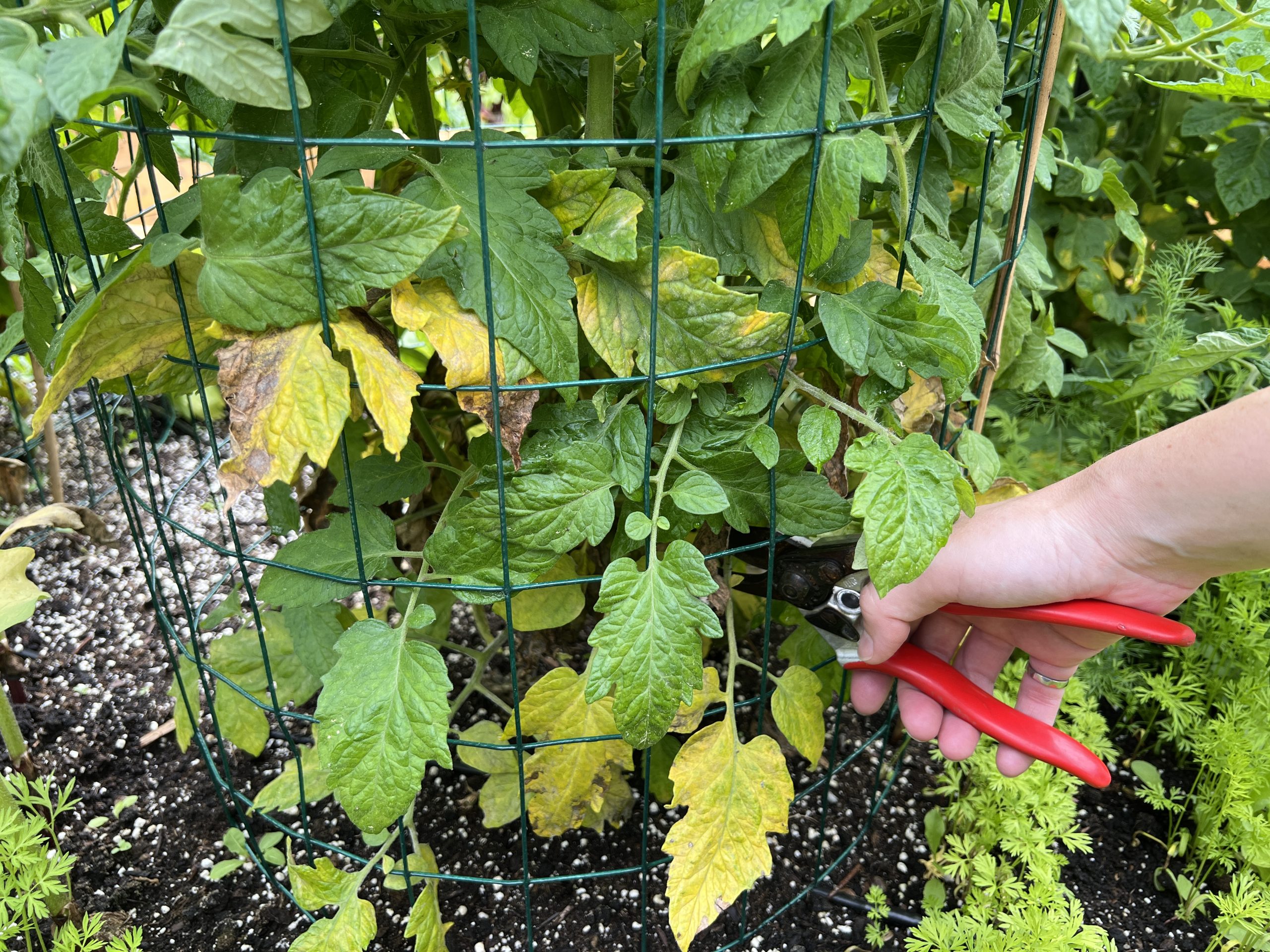
- Pick off spotted leaves as soon as you see them. Put them in the trash, not your compost.
- Remove the lowest leaves, up to about 12 inches (30 cm) off the ground, so soil cannot splash onto them.
- Mulch the soil under the plants with straw or shredded leaves.
- Water at the base of the plant in the morning, not over the leaves.
- Clean your pruners between plants.
Fungicides can protect healthy leaves. Copper sprays and products made with Bacillus subtilis or Bacillus amyloliquefaciens are common choices for home gardens. They do not cure spotted leaves. They slow the spread to new leaves. Start at the first sign of spots, and follow the label.
What to do about late blight
Late blight moves too fast to treat once it takes hold. If you are sure you have late blight:
- Pull the infected plants.
- Put them in a sealed garbage bag.
- Put the bag in the trash, not the compost.
Fruit without spots is fine to eat. Do not can or store fruit from plants with late blight, since spotted fruit rots fast.
How to prevent tomato blight
- Rotate. Do not plant tomatoes, potatoes, peppers, or eggplant in the same spot more than once every three years.
- Space plants 24 to 36 inches (60 to 90 cm) apart so air can move between them.
- Stake or cage plants to keep leaves off the ground.
- Mulch to stop soil from splashing onto leaves.
- Water at the base, in the morning.
- Prune off the lowest leaves once plants are established.
- Clean up all plant debris in fall.
- Pull up volunteer potatoes and tomatoes. Late blight can survive in potato tubers left in the ground.
Blight-resistant tomato varieties
Some newer varieties resist one or both kinds of blight:
| Variety | Resists |
|---|---|
| ‘Defiant PhR’ | Late blight, some early blight |
| ‘Mountain Magic’ | Late blight and early blight |
| ‘Iron Lady’ | Late blight, early blight, and septoria leaf spot |
Resistant varieties can still get blight in a bad year, but they hold on much longer.
More tomato help
Seed companies I like
These are the seed companies I order from for my own garden.
- Botanical Interests: beautiful packets with growing notes printed inside
- High Mowing Organic Seeds: certified organic, grown in Vermont
- True Leaf Market: big selection of hybrids, microgreens, and cover crops
Some links earn me a commission at no cost to you. As an Amazon Associate I earn from qualifying purchases.



Leave a Reply