Hydrangeas
Hydrangeas, with their opulent blooms and captivating color-changing abilities, are a gardener’s dream. From the iconic mophead and delicate lace-cap varieties to the panicle and oakleaf types, hydrangeas offer a rich tapestry of forms and hues. Intriguingly, many hydrangea blossoms change color based on soil pH, making them nature’s litmus test.
This section invites you to immerse yourself in the enchanting world of hydrangeas. Discover care tips, delve into the different varieties, and explore the magic behind their chameleon-like blooms. Whether you’re a seasoned hydrangea enthusiast or new to these botanical treasures, a world of wonder awaits.
-

Climbing hydrangea care
Good climbing hydrangea care starts with selecting a planting location with moist, free-draining, slightly acidic soil. This plant is tolerant of full shade but grows…
-

Climbing hydrangea problems
The most common problem with climbing hydrangeas is the lack of blooms. This is usually caused by pruning the plant at the wrong time of…
-

Climbing hydrangea shade tips
Hydrangeas planted in the shade generally grow more slowly than those planted with a bit of direct sunlight but can still become large flowering vines.…
-

10 climbing hydrangea varieties
Climbing hydrangeas are not available in as many different cultivars as most other types, but there are still quite a few lovely varieties to choose…
-

Oakleaf hydrangea growth rate
Oakleaf hydrangea shrubs typically grow about 1-2 feet taller each year until they reach their mature height. Miniature varieties like PeeWee usually put on up…
-

What to plant with oakleaf hydrangea
Start by choosing large permanent companion plants to plant with your oakleaf hydrangea, including shade trees for the area and hedge plants to define the…
-

Pruning oakleaf hydrangea
Oakleaf hydrangeas are best pruned in the summer, right after the flowers on the shrub have started to fade, as this species blooms on old…
-

5 popular oakleaf hydrangea varieties
Oakleaf hydrangeas are absolutely marvelous, and there are quite a few top-notch cultivars to choose from. Let’s look at five of the most popular varieties:…
-

Do hydrangeas bloom all summer?
Only certain varieties of hydrangea growing in their optimal climates can bloom all summer. In ideal mild climates like Zone 7, choose “reblooming” varieties that…
-

Hydrangea tree in winter
To care for a hydrangea tree in winter, keep it well-watered until the ground freezes. In areas with mild winters, continue watering it deeply on…
-

How big does a hydrangea tree get?
Hydrangea trees typically grow to reach 6-8 feet tall with a canopy width of 4-6 feet wide. Newer compact cultivars like ‘Little Lime’ tend to…
-

How to plant a hydrangea tree
To plant a hydrangea tree, start by finding a planting location that receives the right amount of sun and ideally has well-drained soil. Dig a…
-

How to care for a hydrangea tree
Hydrangea trees tend to grow best when the leaves are receiving at least 6-8 hours of sunlight per day, ideally in the morning. Water them…
-

How to trim a hydrangea tree
Most hydrangea trees are created using the species Hydrangea paniculata. Year-round pruning includes general maintenance like removing dead, damaged, or diseased branches. Deadheading by snipping…
-
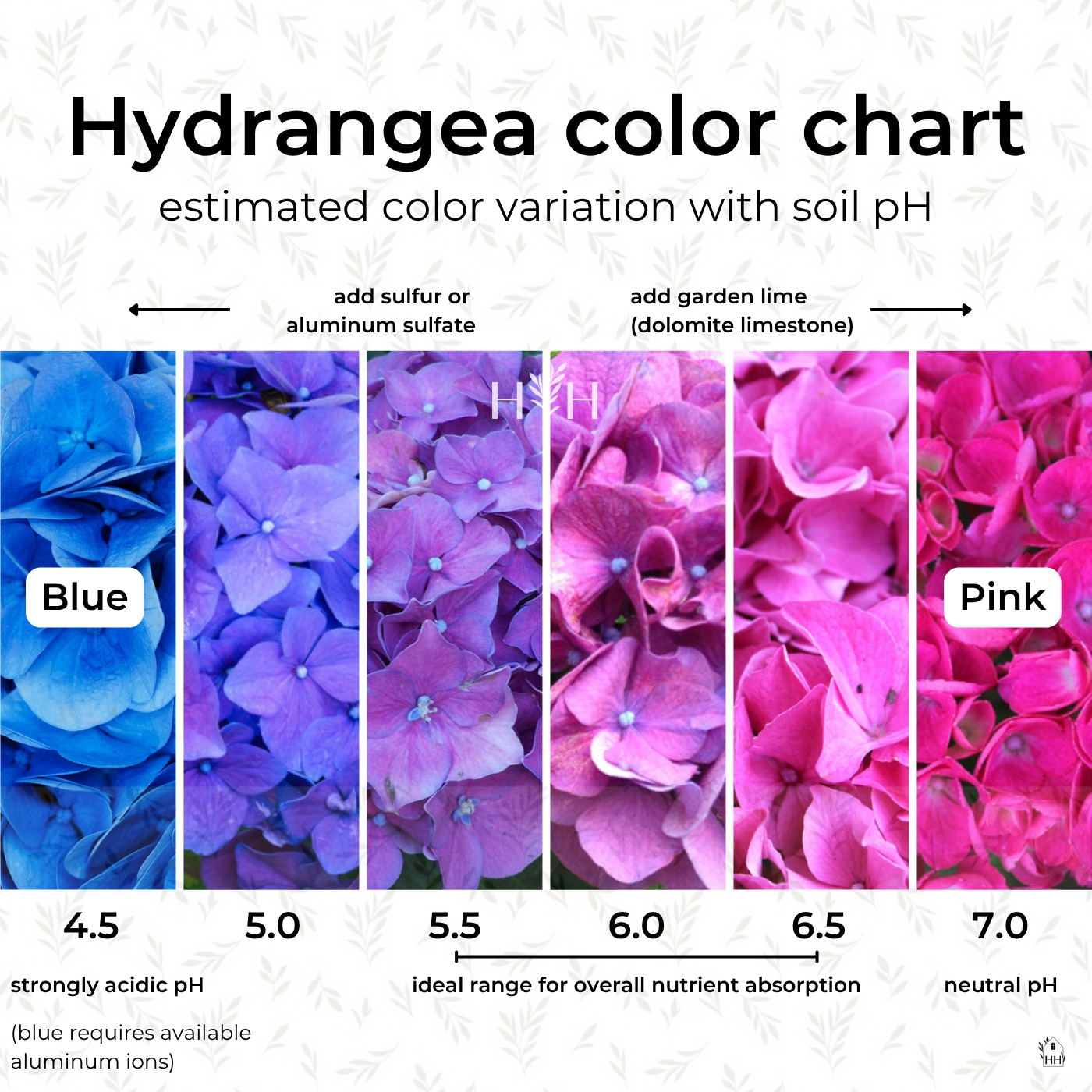
Hydrangea color chart
Hydrangea flower color follows soil pH. Soil with a pH below 5.5 gives blue flowers. Soil with a pH above 6.5 gives pink flowers. Soil…
-

14 hydrangea tree varieties
Looking for the best hydrangea tree varieties to grow? Here are 10+ of the best tree form hydrangeas to consider. These are all standard cultivars…
-

Reblooming hydrangea basics
A reblooming hydrangea is a cultivar that blooms on both old woody stems and fresh new growth, extending the blooming season into summertime. Some of…
-

Endless Summer hydrangea
Endless Summer hydrangea is a reblooming mophead-type hydrangea shrub known for its gorgeous flowers and ability to rebloom in mid-late summer. While most other bigleaf…
-

Annabelle hydrangea
Annabelle hydrangea is the most popular cultivar of Hydrangea arborescens, grown for their beautiful rounded white flower clusters. The original Annabelle hydrangea was found growing…
-

Tuff Stuff hydrangea
Tuff Stuff hydrangea is a compact variety of mountain hydrangea grown for their graceful flower clusters. While the flowers are usually pink, this type can…
-

Little Lime hydrangea
Little Lime hydrangea is a compact variety of panicle hydrangea known for its beautiful flowers. These shrubs grow in full sun to partial shade, reaching…
-

Limelight hydrangea
Limelight hydrangea is a cultivar of Hydrangea paniculata with green-white flowers that mature to a soft pink hue. This flowering shrub generally forms large bushes…
-

Hydrangea fertilizer
Hydrangea plants can benefit from well-balanced, slow-release organic fertilizer. Some of the best fertilizers for hydrangeas are Espoma Holly-Tone, Dr. Earth Premium Gold, and Happy…
-

Types of hydrangeas
There are six common types of hydrangeas: bigleaf, smooth, panicle, oakleaf, mountain, and climbing hydrangeas. These deciduous plants are mainly cultivated as shrubs (with the…
