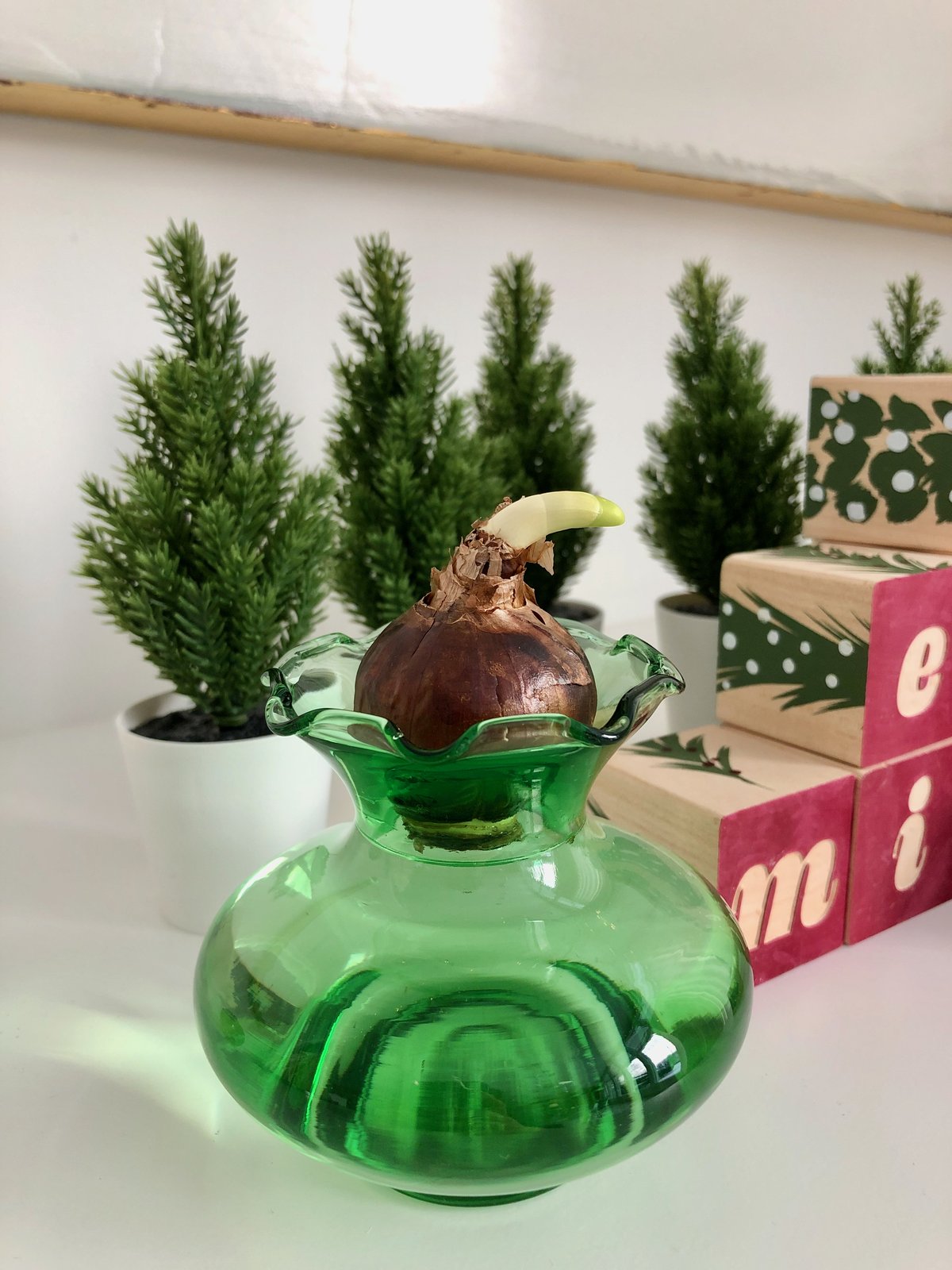
Set a hyacinth bulb in a forcing vase, with the base just above the water. If the bulb was not sold as pre-chilled, give it 12 to 15 weeks of cold at 40°F to 45°F (4°C to 7°C). Keep the vase cool and dark until white roots fill the chamber and the shoot stands 2 to 4 inches (5 to 10 cm) tall. Then move it to a bright, cool room. Flowers open in two to four weeks. Top up the water as it drops. Compost the bulb after it blooms.
The fast decision: check the package. If it says pre-chilled, prepared, or pre-cooled, skip the long fridge wait and go to the vase step. If it does not, give the bulb a cold period, either in a paper bag in the refrigerator or in the vase in a cool, dark place. Do not add a second 12-week cold period on top of the first. Details are below.
Choose the right bulbs
Buy hyacinth (Hyacinthus orientalis) bulbs that feel firm and heavy for their size. Skip any bulb that is soft, moldy, or light and papery. Large bulbs make the biggest flower spikes. Medium bulbs fit narrow forcing vases better.
Pre-chilled bulbs are sold in fall and early winter as pre-chilled, prepared, or pre-cooled. They save you weeks of fridge time. Bulbs sold for outdoor planting are not pre-chilled. They still work, but they need a cold period at home first.
A forcing vase has a cupped top that holds one bulb above a narrow water chamber. A wide jar filled with pebbles or marbles works too. Pick a container that holds the bulb steady so it cannot tip.
Chill the bulbs if they are not pre-chilled
A hyacinth needs a long cold spell before it will flower on schedule. Iowa State University Extension and the University of Wisconsin Horticulture both call for 12 to 15 weeks of cold for hyacinths. If you cannot find pre-chilled bulbs, Iowa State says to put them in a paper bag and keep them at 40°F to 45°F (4°C to 7°C). A refrigerator works. Do not use a sealed plastic bag, because the bulbs need air. Check them now and then, and throw out any that dry out or start to rot.
Keep the bag away from apples, pears, and other ripening fruit. Ripening fruit gives off ethylene gas, and the gas can damage the flower inside the bulb. Iowa State and Wisconsin both warn about this. Store the bulbs in a vegetable drawer with nothing else, or in a second fridge if you have one.
You can also skip the paper bag and do the cold period in the vase, as described in the next sections. Pick one method. A bulb that has already had 12 to 15 weeks in the fridge does not need another 12 weeks of cold in the dark.
Timing matters if you want flowers for a certain date. Iowa State counts 12 to 15 weeks of cold, plus two to four weeks to bloom once the cold period ends. Bulbs that start their chill in late November will bloom in late winter, not for Christmas. For a December bloom, buy pre-chilled bulbs and start them in early fall.
Set the bulb in the vase
Fill the vase with room-temperature water. Set the bulb in the cup with the pointed end up and the flat basal plate down. Add or remove water until the base of the bulb sits about a quarter inch above the surface. Virginia Cooperative Extension uses this same quarter-inch gap. The roots will grow down and find the water. If the base sits in water, the bulb can rot. Iowa State and Wisconsin both say the bulb should never sit in the water.

With a jar and pebbles, fill the jar partway with pebbles and set the bulb on top. Pour in water until it reaches just under the base of the bulb. Press more pebbles around the sides to hold the bulb upright.
Wear gloves when you handle the bulbs. Washington State University Extension notes that the papery skin can irritate bare skin. The University of Illinois attributes that irritation to calcium oxalate crystals in the bulb, along with alkaloids such as lycorine.
Root the bulb in the dark
If you are giving an unchilled bulb its cold period in the vase, move the vase to a cool, dark, well-ventilated place at about 45°F (7°C). An unheated garage, a cold basement, or a closet against an outside wall can work if the temperature stays in a safe range. A Washington State University Extension guide on forcing hyacinths in water uses about 45°F (7°C) for 13 weeks, and warns that temperatures above 55°F (13°C) push leaf growth before the roots catch up. Temperatures below 35°F (2°C) stop root growth, and frozen water can crack the vase.
Cover the bulb with an upside-down paper bag or a small cardboard cone if the spot is not dark. Check the water level once a week. Add water to keep the level about a quarter inch under the bulb. If the water looks cloudy, pour it out and refill the vase.
Roots show first as white threads in the water. Go by the bulb, not only the calendar. The vase is ready to come into the light when white roots fill the bottom of the chamber and the green or yellow-green shoot is 2 to 4 inches (5 to 10 cm) tall. Washington State looks for a 2- to 3-inch shoot. University of Missouri Extension waits until the shoot is 3 to 4 inches (8 to 10 cm) tall and the flower cluster has started to push free of the bulb, which may take 8 to 12 weeks in the vase.
If the bulb was already pre-chilled or spent 12 to 15 weeks in a paper bag, it does not need another long cold spell. Set it in the vase, keep it cool, and give the roots time to grow. Keep the vase dark or in very low light until the roots are growing well and the shoot is a few inches tall. This usually takes a few weeks, not another 12.
Bring the vase into the light
Move the vase to a spot with low to medium light at 50°F to 60°F (10°C to 16°C) at first. The shoot will turn from pale to green in a few days. Washington State and Iowa State both use this short green-up step, usually four to five days. After that, move the vase to a bright place at 60°F to 65°F (16°C to 18°C). Avoid harsh direct sun at first. Keep the room cool. Cool air makes the flowers last longer. A warm spot over a radiator or heat vent shortens the bloom.
Turn the vase a quarter turn every day or two. The shoot leans toward the window, and turning keeps it straight. Iowa State says flowers usually open in two to four weeks after the bulb comes out of the cold. Washington State gives about three weeks. Iowa State also says to replace the water one to two times a week, or whenever it becomes cloudy. Check the level often in the first week, when the water can drop below the new roots.
Keep the stem upright
A hyacinth flower is heavy for its stem. Forced bulbs in water often flop. Set the pebbles tight around the bulb to anchor it. If the spike leans, tie it to a thin stake with soft twine, leaving some slack. A cool room and bright light keep the stem shorter and sturdier. Iowa State also suggests a tall glass cylinder, with pebbles and water in the bottom quarter, so the leaves and stem can grow up inside the glass for support. The same tips help when you grow paperwhites in water, which flop for the same reason.
What to do after the flowers fade
A bulb forced in water has used up most of its stored food. Iowa State says hyacinths forced in hyacinth glasses should be discarded after bloom. Wisconsin adds that bulbs grown without potting mix are hard to transplant and often will not bloom again, even in the garden. Compost the bulb. Do not expect it to rebloom in the vase, and do not count on a strong show if you plant it outdoors later.
All parts of a hyacinth can cause trouble if eaten, and the bulb holds the most. The ASPCA lists garden hyacinth as toxic to dogs, cats, and horses, with vomiting, diarrhea, and skin reactions among the signs. Keep the vase out of reach of cats, dogs, and small children.
Other bulbs to force indoors
Hyacinths are one choice. My guide on forcing tulips indoors covers pots and chilling, and the post on growing amaryllis bulbs indoors covers a bulb that needs no cold period.
Hyacinth forcing FAQ
How long do you chill hyacinth bulbs before forcing them in water?
If the bulbs were not sold as pre-chilled or prepared, give them 12 to 15 weeks of cold at 40°F to 45°F (4°C to 7°C). Iowa State University Extension and the University of Wisconsin Horticulture both use this range. You can chill them in a paper bag in the refrigerator, or in the vase in a cool, dark place. Do not stack both long cold periods.
How high should the water be in a hyacinth forcing vase?
Keep the water about a quarter inch below the basal plate, the flat root end of the bulb. Virginia Cooperative Extension uses this gap. The roots will grow down into the water. If the base of the bulb sits in the water, it can rot.
How long until a forced hyacinth blooms?
After the cold period ends and you bring the vase into the light, flowers usually open in two to four weeks, according to Iowa State University Extension. Washington State University Extension gives about three weeks. Cool rooms make the flowers last longer. Heat shortens the bloom.
Will a hyacinth forced in water bloom again?
Usually not. Iowa State University Extension says bulbs forced in water should be discarded after bloom. The University of Wisconsin Horticulture notes that bulbs grown without potting mix often will not bloom again, even in the garden. Compost the bulb.
Do hyacinth bulbs irritate skin, and are they toxic if eaten?
Yes on both counts. Wear gloves when you handle the bulbs. The papery skin can irritate bare skin, and the University of Illinois notes that the bulbs contain calcium oxalate crystals. All parts can cause trouble if eaten, and the bulb holds the most. The ASPCA lists garden hyacinth as toxic to dogs, cats, and horses. Keep the vase out of reach of cats, dogs, and small children.
Indoor plant shops I recommend
Good plants and good supplies make indoor growing easier.
- The Sill: houseplants and potting mix delivered
- Click & Grow: the smart garden I use for indoor herbs, 31% off with code HHARVEST from November 3 to 30
- My Amazon storefront: the tools and supplies I keep coming back to
Some links earn me a commission at no cost to you. As an Amazon Associate I earn from qualifying purchases.




Leave a Reply