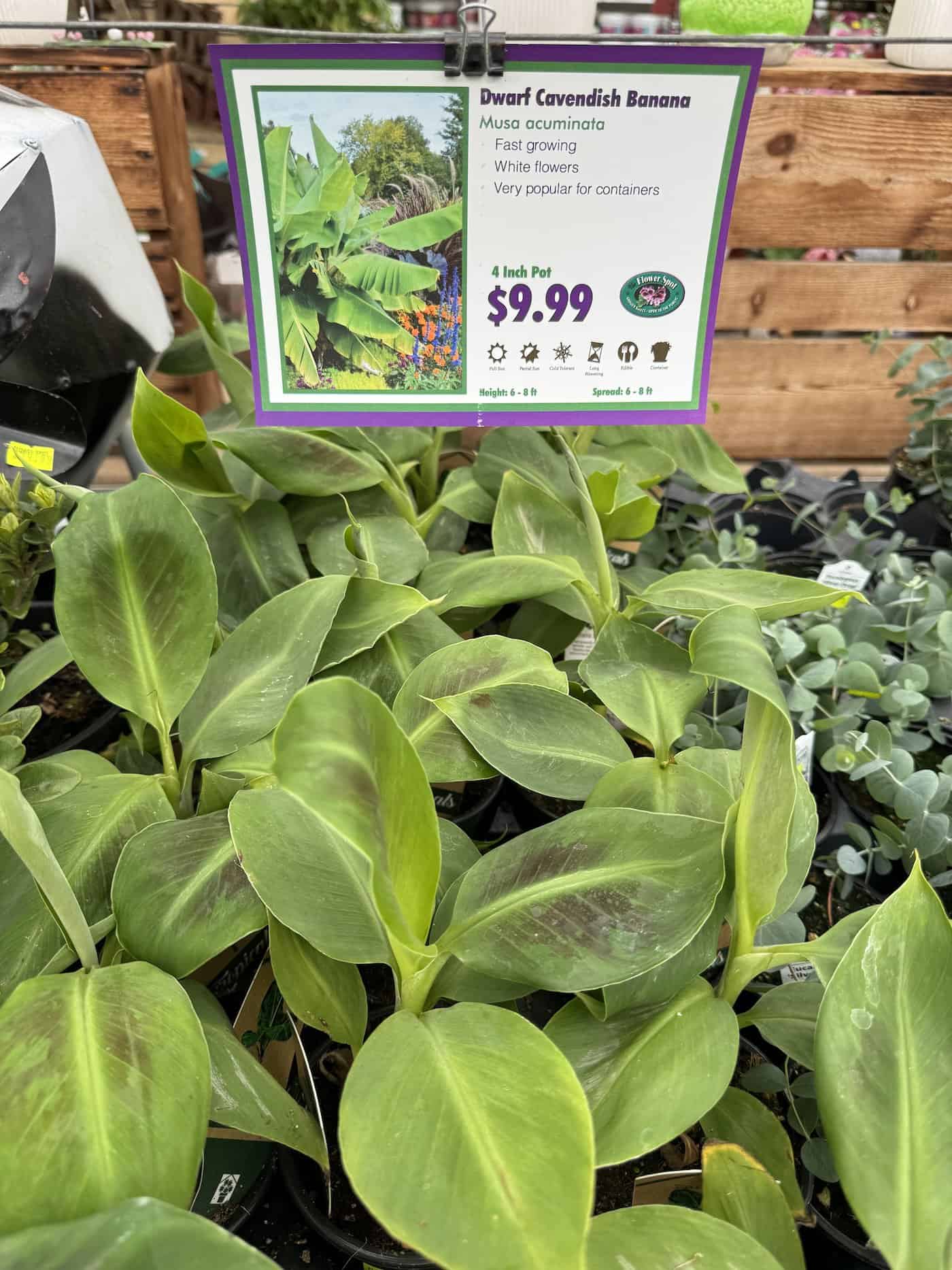
Dwarf Cavendish banana trees are cute, easy-care versions of the full-size banana plants that give us grocery-store bananas. This hardy species is surprisingly low maintenance and doesn’t require any special gardening expertise to keep it happy.
Dwarf banana plants like the mini ‘Cavendish’ thrive in warm, sunny locations with at least six hours of sunlight daily. The soil should be well-draining and rich in organic matter, keeping it consistently moist but not muddy or waterlogged.
Regular feeding with a balanced, water-soluble fertilizer every month during the growing season promotes healthy growth and fruit production. This is especially important for container-grown trees that are isolated from the natural in-ground soil ecosystem. If growing outdoors, protect the tree from strong winds to prevent damage to the leaves and developing fruit.

Care basics
Dwarf Cavendish banana trees should be planted in a sunny location with well-draining soil. Start with a proper hole (if planting in the ground). The hole should be at least twice as wide as the planter pot (but no deeper). If re-potting, use a pot that’s about 2 inches wider than its current pot.
Water thoroughly after planting. Mulch around the tree’s base to help retain moisture.
Banana trees need regular watering during their growing season (spring through fall). Aim for 1 inch of water per week, either from rainfall or irrigation. During hot summer months, you may need to increase this amount slightly. Don’t overwater to the point of muddy soil that creates a long-standing puddle.
Fertilize in the warmer months using an all-purpose fertilizer according to package instructions. Do not fertilize during winter when the plant is dormant.
Dwarf Cavendish bananas are relatively resistant to pests and diseases but can still be affected by aphids, scale insects, mealybugs, nematodes, fungal leaf spot disease, and bacterial wilt disease if conditions encourage it. Conditions that encourage disease include damp leaves, crowded planting, lack of air circulation, and overly shaded locations. Keep an eye out for pests and disease whenever you water.

Planting dwarf bananas
Planting banana trees is best done in the spring or summer when temperatures are warm and the soil is moist. It’s important to choose a spot that gets plenty of sunlight, as this type of banana tree needs at least 6 hours of direct sun each day. If you live in an area with frost or freezing winters, plan to bring the tree into a heated area in the winter.
Like most fruiting plants, look for well-draining and slightly acidic soil. A pH between 5.5 and 7.0 is optimal (but not strictly necessary).
Before planting, mix some compost into the top 12 inches (30 cm) of soil to help retain moisture, add tilth, and provide slow-release nutrients for your banana tree. If you’re planting it in a pot, choose a light organic potting mixture that contains perlite.
Gently remove any weeds from around the area before placing the baby tree in its new home. It’s fine to uncurl any thick roots circling the root ball gently. Don’t worry too much about disturbing the roots – just try not to damage them.
Dig a hole twice as wide as the root ball but only deep enough so that it is level with the surrounding ground once planted. If you plant too deeply, your banana tree may struggle to establish itself properly.
Water thoroughly after planting and ensure all air pockets have been filled in around the root ball. Add a bit more soil if needed.

Watering banana trees
The amount of water needed will depend on the climate you live in, as well as the size and age of your plant. In general, a mature Dwarf Cavendish banana tree needs about 1 inch (2.5 cm) of water per week during its growing season (spring through fall). If you are unsure how much rain has fallen in your area over the past week, use a rain gauge to measure it for accuracy.
During periods of hot weather or drought, increase watering by up to 50%. When temperatures drop below freezing during winter months, reduce watering significantly since the plant won’t be actively growing at this time.
It’s also important to make sure that your banana tree is getting enough drainage so that its roots don’t become overly saturated with standing water. For potted plants indoors or outdoors, check for excess water draining from them after each watering session.

Fertilizing bananas
Fertilizing is an important part of keeping it healthy and happy. Several types of fertilizer can be used, and most all-purpose or fruiting plant fertilizers should do the job in the absence of a soil test.
Nitrogen helps promote growth in leaves and stems while phosphorus encourages root development. Potassium aids in photosynthesis and helps to strengthen cell walls. A balanced fertilizer with all three elements should be applied once every four weeks during the growing season (April through October).
When applying fertilizer, always follow the instructions closely. If in doubt, use less fertilizer than recommended. Make sure not to over-fertilize as too much can cause damage to your plant’s roots or even kill it altogether.
Organic fertilizers can be helpful since they provide slow-release nutrients that help keep soil healthy over time without burning delicate roots, as chemical fertilizers can. Additionally, organic fertilizers often don’t require frequent applications.
Finally, do not forget about mulching. Mulch will help retain moisture in the soil while providing additional nutrition from decomposing organic matter such as wood chips or shredded bark – both excellent sources of natural nutrients for plants. Just remember to not pile up too much mulch around your tree’s trunk, as this could lead to rot or disease if left unchecked.
Pests & diseases
Banana trees are susceptible to a variety of pests and diseases. Common pests include aphids, mealybugs, mites, scale insects, thrips, and whiteflies. These can be prevented by regularly inspecting the tree for signs of infestation and taking appropriate action if necessary.
Aphids
Aphids are small sap-sucking insects that feed on the leaves and stems of banana trees. They can cause yellowing or wilting of the foliage as well as stunted growth. To control aphids, use insecticidal soap or horticultural oil sprays to kill them directly or introduce beneficial predators such as lady beetles into your garden to keep their numbers in check.
Mealybugs
Mealybugs are soft-bodied insects that feed on plant juices from roots and stems causing stunted growth and leaf yellowing or wilting. To control mealybugs use insecticidal soaps or oils applied directly onto affected areas followed up with regular inspections for re-infestations. Introducing beneficial predators such as lacewings is also an effective way to reduce their population size over time without using chemical pesticides.

Mites
Mites are tiny spider-like creatures that feed on plant juices from leaves causing discoloration, distortion, and premature leaf drop in severe cases. To control mites use insecticidal soaps or oils applied directly onto affected areas followed up with regular inspections for re-infestations; introducing predatory mite species is also an effective way to reduce their population size over time without using chemical pesticides.
Scale insects
Scale insects suck sap from the bark of banana trees resulting in weakened plants with reduced vigor due to nutrient deficiencies caused by excessive feeding activity; they can also secrete honeydew which encourages fungal growth leading to further damage if left unchecked. Control scale populations by applying horticultural oil sprays directly onto affected areas followed up with regular inspections for re-infestations; introducing parasitic wasps is also an effective way to reduce their population size over time without using chemical pesticides.
Thrips
Thrips are small flying insects that feed on plant tissues causing distorted foliage along with silver spots where they have fed upon tender new shoots; this damage reduces photosynthesis efficiency leading to poor fruit production if left unchecked. Control thrips populations by applying insecticides specifically formulated against them following label instructions carefully; introducing predatory thrips species is also an effective way to reduce their numbers without resorting to chemicals.
Whiteflies
Whiteflies lay eggs under leaves which hatch into larvae that then feed off plant tissue before maturing into adults. These adult flies fly away when disturbed, leaving behind a sticky residue known as ‘honeydew’ which encourages fungal growth and further damage if left unchecked. Control whitefly populations by applying systemic insecticides specifically formulated against them following label instructions carefully; introducing beneficial predators such as ladybirds will help keep their numbers down naturally over time too.




Leave a Reply