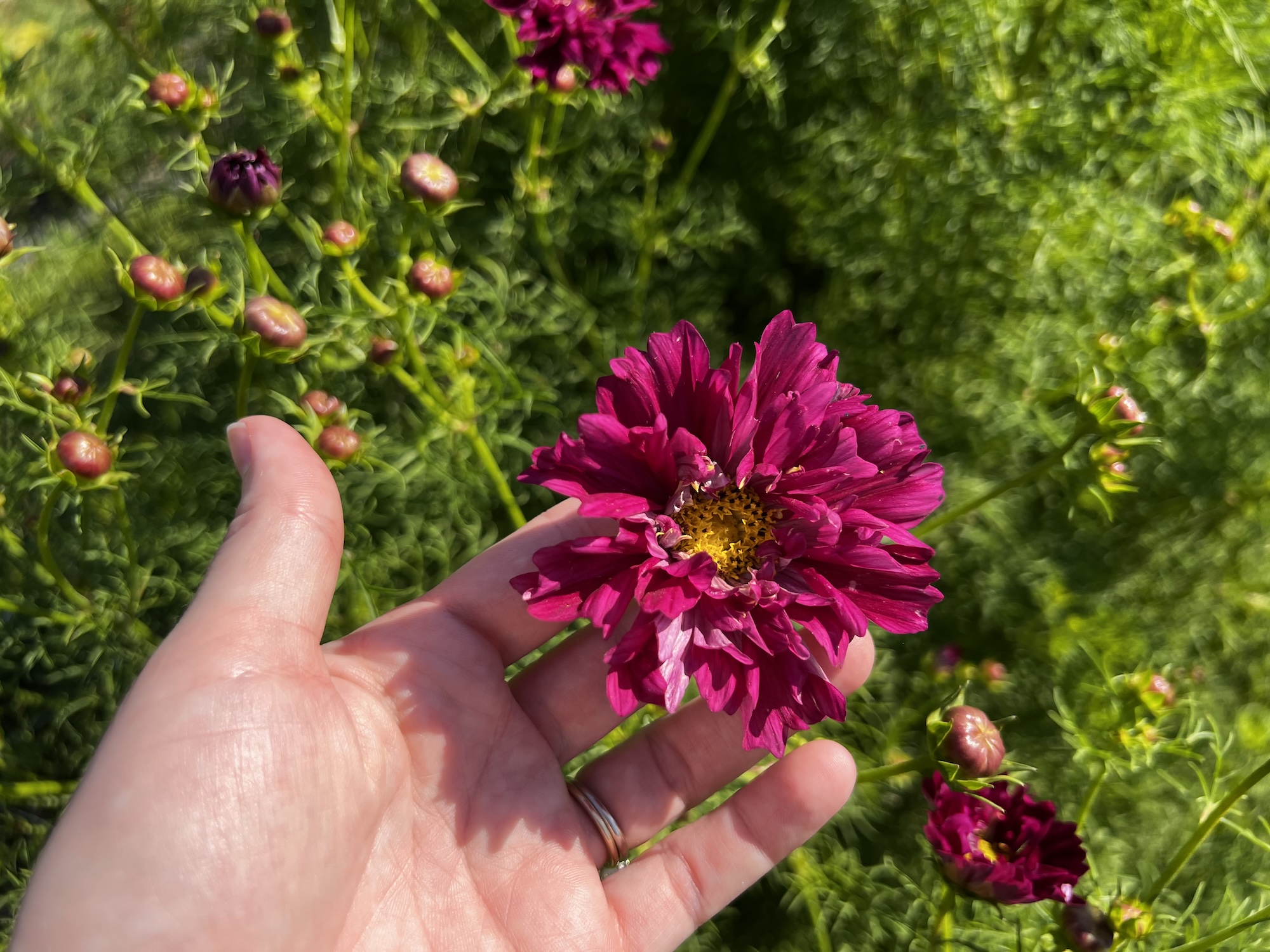
To grow cosmos, sow seeds outdoors after the last frost once the soil reaches 65°F (18°C). Plant them in full sun and lean, well-drained soil. Utah State University Extension says to sow seeds no deeper than 1/8 inch and expect sprouts in 7 to 14 days. Space plants 1 to 2 feet apart. Skip the fertilizer, since Illinois Extension warns that too much fertilizer and water lead to fewer flowers. Deadhead spent blooms, and cut tired plants back to 12 to 18 inches for a second flush.
Have a sunny bed with poor soil? Cosmos are a strong fit. Have rich soil full of compost? Expect tall, leafy plants with fewer blooms. Want flowers for cutting? Pick tall cultivars and stake them. Don’t want volunteers next year? Deadhead often, since cosmos self-sow with ease.
Cosmos are easy-to-grow annual flowers perfect for adding some low-maintenance color to your garden. These plants grow and flower best in full sun, and Utah State University Extension says they need at least 8 hours of light. They prefer well-drained soil, but don’t need nutrient-rich soil to thrive.
Sow seeds outside after the last frost, or transplant seedlings once the soil warms to 65°F (18°C). Space plants to avoid overcrowding (or thin seedlings). Water young plants to help them grow roots, then water less often once they are established.
Cosmos are drought-tolerant and do not like constantly wet soil, so the odd dry spell is ok. Remove faded flowers to keep the plants blooming. This encourages more blooms and keeps the plants looking tidy.

Preparing soil to grow cosmos
Pick a sunny spot with soil that drains well. Clear the area of weeds, rocks, and plant debris. Use a shovel or garden fork to loosen the top ~6 inches of soil. Mix in a bit of compost to improve structure and add organic matter. Avoid adding too much compost or rich fertilizers, as cosmos grow best in soil that is not too fertile.
Break up large clumps and rake the soil flat to create a nice seed bed. Water the area lightly to help settle the surface. Make sure the soil stays loose and weed-free before planting.
Planting cosmos seeds
Wait until the danger of frost has passed and the soil is at least 65°F (18°C). Scatter cosmos seeds on the soil surface. Press the seeds gently into the soil with your hand or the back of a rake. Plant them no deeper than 1/8 inch (3 mm). USU notes that deeper planting reduces germination, so a light rake over the seeds is enough.
Water the area with a fine spray to avoid moving the seeds. Keep the soil moist until the seeds sprout. They take 7 to 14 days, and USU says they germinate best when the soil is 70 to 75°F (21 to 24°C). Thin the seedlings when they reach a few inches tall. USU recommends 1 to 2 feet between plants. Closer spacing lets tall plants hold each other up. Read the seed packet for specific details about different cultivars.
Planting cosmos seedlings
Choose healthy cosmos seedlings from the garden center with nice green leaves and no signs of stress. Wait until the risk of frost has passed before planting them outdoors.
Dig holes slightly larger than the seedling containers. Space the holes 12 to 18 inches apart to allow airflow between plants and give each seedling room to grow.
Gently remove the seedling from its container. If the roots are tightly circled around the outside, you can gently break them up and uncoil them. Place the roots in the hole at the same depth it grew in the pot. Fill in the soil around the roots and press firmly.
Water the seedlings well after planting. Keep the soil moist for the first week to help the roots settle.


Caring for cosmos plants in the garden
Water cosmos plants regularly during the first few weeks to help their roots grow strong. Once established, water only when the soil feels dry. Avoid overwatering, as cosmos prefer drier soil.
Skip the fertilizer unless your soil is very poor. Illinois Extension notes that too much fertilizer and too much water can lead to plants with fewer flowers.
Pinch off the top few inches of skinny young plants to encourage bushier growth. Thin seedlings or young plants if they are too close together and look like they are crowding each other. Give them space to grow and allow air to flow between them. Stake tall varieties in windy or rainy areas to keep them upright in inclement weather.
Keep an eye out for pests, though cosmos are usually low-maintenance and pest-resistant. Deadhead spent blooms to keep the plants flowering and cut down on self-sowing. If plants slow down in midsummer, USU suggests cutting them back to 12 to 18 inches. They come back into bloom in about a month.
Cosmos are sensitive to day length. USU notes they bloom best in late summer, when the days get shorter.

Cutting cosmos flowers for bouquets
Cut cosmos flowers for bouquets early in the morning before the heat of the day. Choose blooms that have just opened or are about to open. Regular harvesting encourages more blooms to grow.
Use clean, sharp floral snips or kitchen scissors to cut the stems above a leaf node. Remove the lower leaves that would sit below the waterline in a vase. Place the stems in a bucket of cool water right after cutting (bring it outdoors to the garden with you).
Let the flowers rest in water in a cool area for a few hours before arranging them. This helps them stay hydrated and last longer in bouquets and other floral arrangements.

Saving cosmos seeds
Cosmos seeds are among the easiest types of seeds to save. Let some cosmos flowers stay on the plant until they fade and form seed heads. Then wait until these seed heads dry out and turn brown.
Snip off the seed heads and place them in a paper bag or on a mesh tray/screen. Leave them to finish drying in a dry spot.
Once fully dry, rub the heads gently to separate the seeds. Store the seeds in a labeled envelope or airtight glass container. Seeds store best in a dark, dry place until planting season. Collected seeds are most likely to grow true to type when collected from single-color heirloom varieties grown in isolation from other cultivars.
Cosmos growing FAQ
How long do cosmos seeds take to germinate?
About 7 to 14 days. They sprout best when the soil is 70 to 75°F (21 to 24°C).
How deep do you plant cosmos seeds?
No deeper than 1/8 inch (3 mm). Scatter them and give them a light raking.
Do cosmos need fertilizer?
No. They prefer lean soil, and too much fertilizer leads to fewer flowers.
How far apart should cosmos be planted?
1 to 2 feet apart. Closer spacing helps tall plants support each other.
Do cosmos come back every year?
Garden cosmos are annuals, but they self-sow with ease. Deadhead if you don’t want volunteers.
Where to buy plants online
These nurseries ship well-rooted plants and stand behind them.
- Nature Hills Nursery: the largest online nursery in the US
- Plant Addicts: perennials, shrubs, and trees with a plant guarantee
- Botanical Interests: flower seeds for the beds you plan yourself
Some links earn me a commission at no cost to you. As an Amazon Associate I earn from qualifying purchases.




Leave a Reply