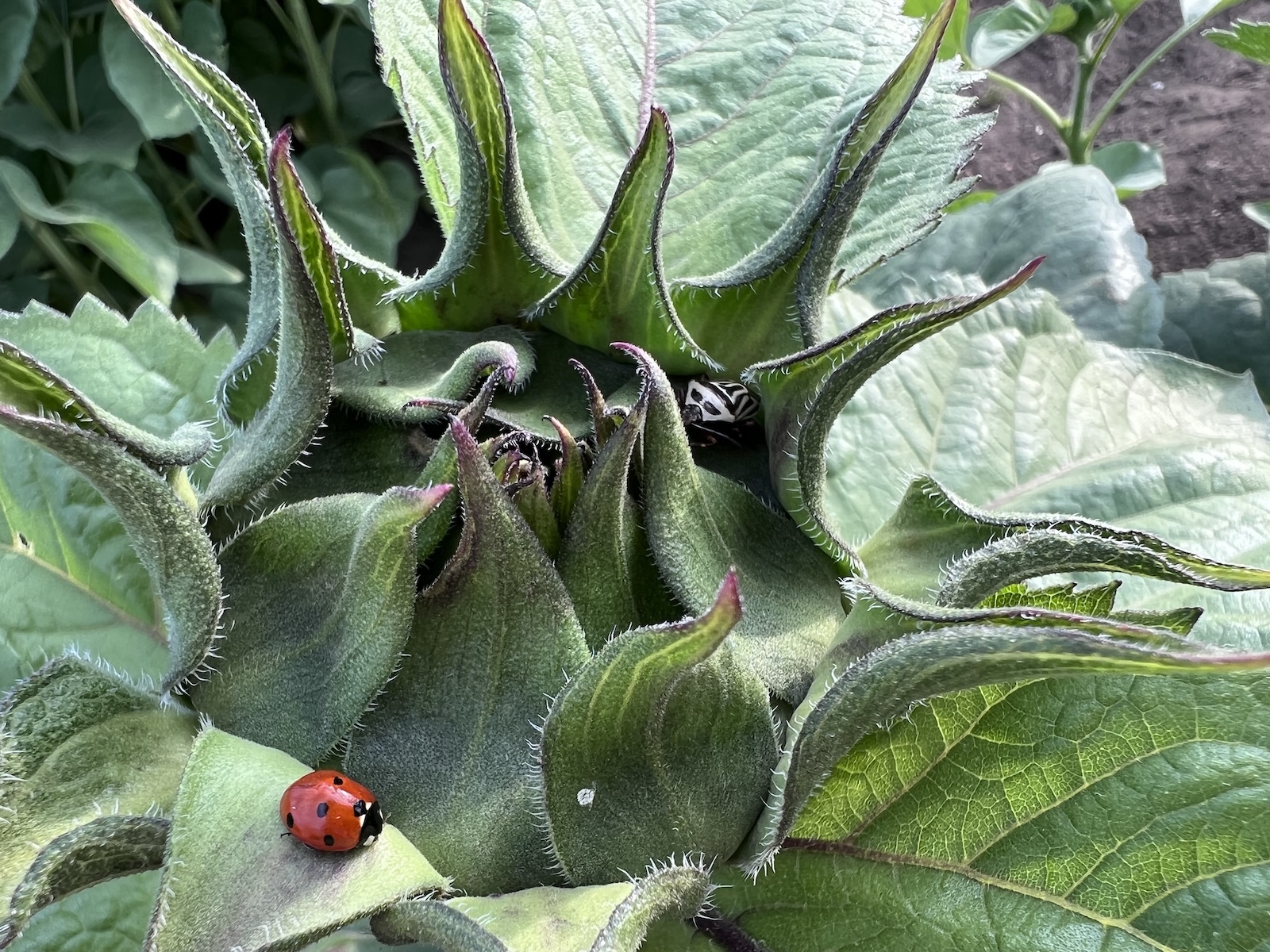
Not every bug in your garden is a pest. Many insects eat aphids, caterpillars, mites, and slug eggs. These beneficial insects do a lot of pest control for free. They need food, shelter, and a garden without broad-spectrum sprays.
Here are the beneficial insects to know, and how to bring more of them into your garden.
1. Ladybugs (lady beetles)
Ladybugs are the best-known garden helper. Both the adults and the larvae eat aphids, plus mites, scale insects, and insect eggs.
Learn to spot the larvae. They look nothing like the adults. They are black or dark gray with orange spots, long, and spiky, like tiny alligators. They are easy to mistake for a pest.
2. Green lacewings
Adult green lacewings are pale green with big, clear, lacy wings. They feed on nectar and pollen. Their larvae are the hunters. They are small, tan, and shaped like a tiny alligator with curved jaws. They eat aphids, mites, thrips, small caterpillars, and insect eggs.
3. Hoverflies
Hoverflies, also called syrphid flies, look like small bees or wasps with yellow and black stripes. They do not sting. You can spot them hovering in place over flowers.
The adults pollinate flowers. Their larvae are small, legless, and green or tan, and they eat aphids.
4. Parasitic wasps
Parasitic wasps are tiny, and most are smaller than a grain of rice. They do not sting people. The females lay eggs inside or on pests, and the larvae eat the pest from the inside.
You can see their work in two places:
- Aphid mummies. These are swollen, tan or bronze aphids that stay stuck to the leaf. A wasp is growing inside.
- White cocoons on tomato hornworms. Leave these hornworms in the garden so the wasps can hatch. Here is more on how to get rid of tomato hornworms.
5. Ground beetles
Ground beetles are shiny, dark beetles that run fast across the soil at night. During the day, they hide under mulch, boards, and stones. They eat slugs, slug eggs, cutworms, and other soil pests.
Give them places to hide, and avoid broad-spectrum insecticides. Here is more on how to get rid of slugs in the garden.
6. Minute pirate bugs
Minute pirate bugs are tiny black and white bugs. They eat thrips, spider mites, aphids, and insect eggs. They can give a small, harmless pinch to people in late summer.
7. Soldier beetles
Soldier beetles are long, soft beetles, often orange or tan with dark wing covers. You often see them on goldenrod and other late-summer flowers. They eat aphids and caterpillar eggs, and they pollinate flowers too.
8. Predatory mites
Predatory mites are tiny relatives of spiders. They eat spider mites and their eggs. You can buy them for greenhouses and houseplants. Here is how to get rid of spider mites.
9. Spiders
Spiders are not insects, but they are some of the best pest hunters in the garden. They catch aphids, flies, caterpillars, and beetles. Leave them be.
How to attract beneficial insects
Plant small flowers
Many beneficial insects are tiny and need small flowers they can reach. Plants with flat clusters of small flowers work best:
- Dill, fennel, and cilantro left to flower
- Yarrow
- Sweet alyssum
- Parsley in its second year, when it flowers
- Goldenrod and asters in late summer
Plant a mix that blooms from spring to fall, so there is always food.
Grow native plants
Native plants feed native insects. For ideas, see my posts on planting a pollinator garden and native plants vs. garden cultivars for pollinators.
Give them shelter
- Leave some leaves and mulch on beds over winter.
- Keep a few stones, logs, or a brush pile in a quiet corner.
- Leave some hollow plant stems standing until spring.
Skip broad-spectrum sprays
Broad-spectrum insecticides kill the good bugs along with the bad. When you need to spray, use targeted products like insecticidal soap, and spray only the plants with pests.
Let some pests stay
Beneficial insects need food to stay. If you remove every aphid, the ladybugs leave or never arrive. A few pests early in the season feed the predators that protect your garden later.
Should you buy ladybugs?
Ladybugs sold in garden centers are often collected from the wild. Many fly away soon after you release them. If you buy them, water the garden first and release them at dusk, near plants with aphids.
Attracting the beneficial insects already near your garden works better over time.
More on garden pests
Seed companies I like
These are the seed companies I order from for my own garden.
- Botanical Interests: beautiful packets with growing notes printed inside
- High Mowing Organic Seeds: certified organic, grown in Vermont
- True Leaf Market: big selection of hybrids, microgreens, and cover crops
Some links earn me a commission at no cost to you. As an Amazon Associate I earn from qualifying purchases.



Leave a Reply