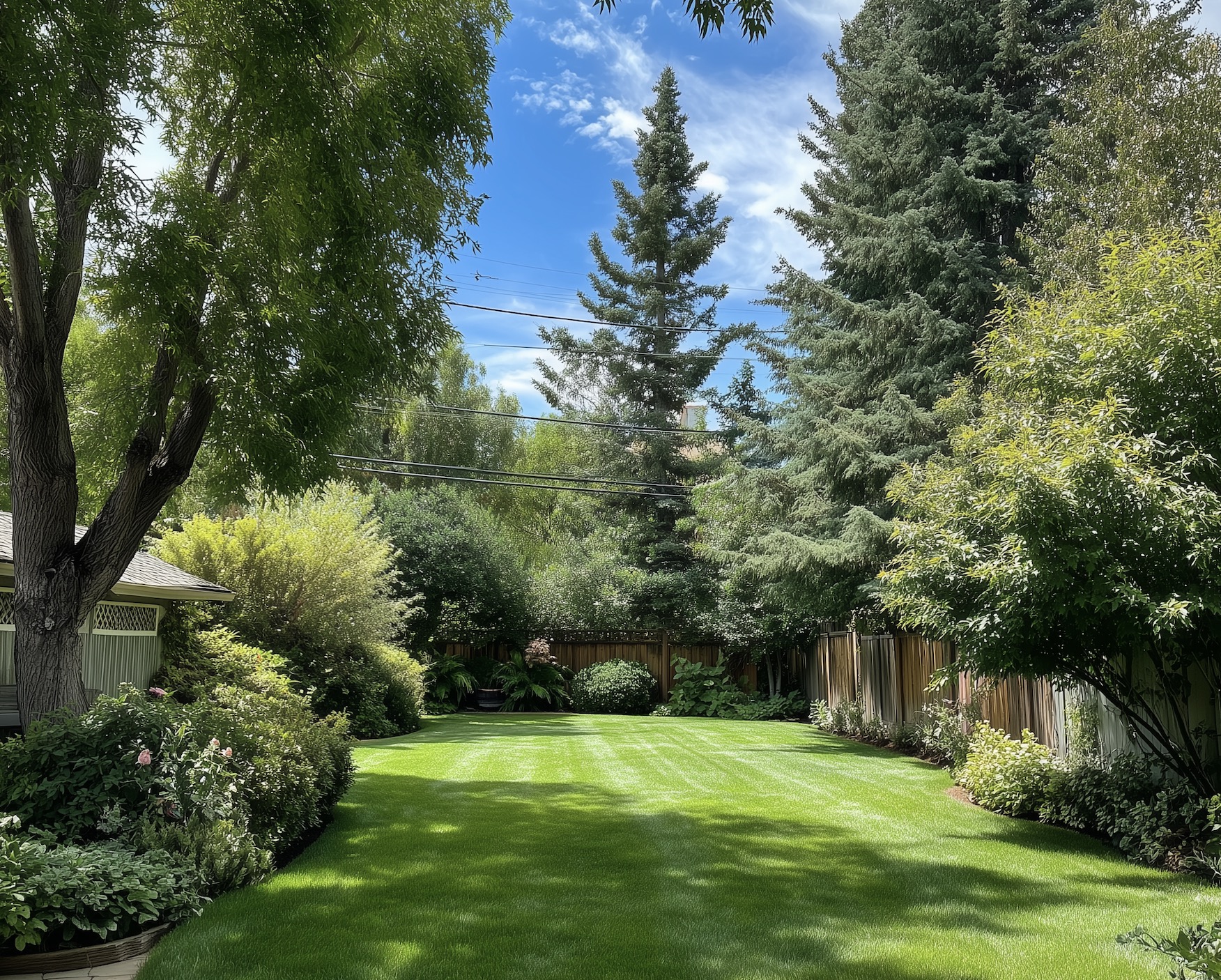
Good backyard trees give shade, privacy, flowers, or fruit without outgrowing the space. For small yards, look at Japanese maples, Little Gem magnolia, flowering dogwood, eastern redbud, crabapples, and semi-dwarf fruit trees, most of which stay between 15 and 30 feet tall. For large lots, sugar maple, oaks, American linden, katsura, and tulip poplar give big shade, but some top 60 feet. Check mature height and width, sun needs, and your hardiness zone before planting, and site large trees well away from the house.
Measure the open space first, then pick a tree whose mature width fits it. A tulip poplar can reach 80 to 120 feet, per NC State Extension, while a flowering dogwood tops out near 15 to 25 feet. Choose a small flowering tree if you want spring color near a patio, a large shade tree if you want to cool the house, and a semi-dwarf fruit tree if you have time for annual pruning.
The best trees for backyard enjoyment tend to provide shade, privacy, and year-round interest. Some of the best backyard trees include various types of maple, magnolia, dogwood, birch, redbud, and even fruit trees like cherry or crabapple. Most tree species are available in a wide range of mature sizes, from dwarf trees for small spaces to towering giants for larger properties.


1. Maple tree
Maple trees are very popular picks for backyards. For large backyards, choose a sugar maple or perhaps ‘Autumn Blaze’. Freeman maples are also lovely. For smaller spaces, amur maples and Japanese maples are well-sized.

2. Magnolia tree
Magnolia trees are a popular choice with homeowners because they have an attractive shape and their beautiful white or pink flowers bloom in springtime. They can get quite large, so keep that in mind when planting one in your backyard. The best magnolias for smaller yards in the south include the ‘Little Gem’ and ‘Teddy Bear’ varieties. In Zones 4-6, look for deciduous hybrids such as the Betty Magnolia.

3. Dogwood tree
Dogwood trees are a popular choice for backyards because of their beautiful blooms in spring. The showy “flower” is a cluster of small true flowers framed by four petal-like bracts. The best dogwoods for small yards include ‘Venus’, ‘Eddie’s White Wonder,’ and ‘Cherokee Brave.’ Flowering dogwood reaches about 15 to 25 feet tall, per NC State Extension. Butterflies and bees visit the flowers, and songbirds eat the red fruit from fall through winter.
Here’s a look at some of the most popular dogwood varieties available:

4. Birch tree
Birch trees are excellent choices for smaller yards because they have a graceful form and beautiful exfoliating bark that adds visual interest all year round. The best birches for small spaces include the ‘Heritage’ and ‘Whitespire’, while river birch and paper birch are also quite popular.

5. Redbud tree
Redbud trees are a popular choice for backyards because of their beautiful spring flowers and interesting heart-shaped leaves. Good picks include ‘Forest Pansy’, with purple leaves and red-orange fall color, and ‘Appalachian Red’. Eastern redbud grows about 20 to 30 feet tall and 25 to 35 feet wide, per NC State Extension, and covers its bare branches in rosy-pink flowers in early spring.

6. Cherry tree
Cherry trees, including edible fruit-growing trees and ornamental flowering cherries, are wonderful backyard trees if you have some time each year for annual maintenance. Weeping cherry is particularly beautiful. Tart cherries are typically easier to grow than sweet cherry varieties (but not as good for fresh eating).

7. Crabapple tree
Crabapple trees are beloved for their colorful blooms in spring and their edible fruits that attract birds through the winter months. The best ones for small yards include ‘Adirondack’ and ‘John Downie’. They reach a mature height of 15-20 feet, so they fit into most backyards quite nicely.

8. Oak tree
Oak trees, including red oak, burr oak, and other popular varieties can work well in a big backyard. For smaller spaces, columnar oaks are available that stay much narrower than a standard oak. Their upright form saves space while still giving height and some shade. They also produce acorns for wildlife!


9. Tulip Tree
Tulip trees (Liriodendron tulipifera) are best suited for large backyards. NC State Extension lists a mature height of 80 to 120 feet and a rapid growth rate, so plan for the full size from the start. The fragrant, cup-shaped yellow-green flowers with an orange band open in late spring and early summer, and the tree prefers full sun and moist, well-drained soil.
10. Spruce tree
Spruce trees are evergreens that have a beautiful conical shape and thick needles that stay green all year long. A standard Norway spruce grows fast to 40 to 60 feet tall, per NC State Extension, so it suits large yards and windbreaks. For small yards, choose a dwarf form such as the slow-growing Dwarf Alberta spruce (Picea glauca ‘Conica’) or one of the many dwarf Norway spruce cultivars. Spruces prefer cool summers and struggle in hot southern climates.

11. Weeping willow tree
While willow trees are certainly quite messy in terms of fallen branches, they can be rather magical on larger creekside properties. They grow fast to about 30 to 40 feet tall and wide, per NC State Extension, but that fast growth comes with weak wood that cracks and breaks under snow or ice. If you have the space, soil moisture, and maintenance time available, these trees can be beautiful in the landscape.
12. Linden tree
Linden trees, also called basswood, are best suited for larger backyards. American linden can reach 60 to 80 feet tall, per NC State Extension, and littleleaf linden reaches 50 to 60 feet. Both grow at a medium rate. Lindens feature beautiful heart-shaped leaves that turn yellow in the fall, and they even provide sweet-smelling flowers in summer.

13. Apple tree
Apple trees can work quite well in backyards if you have the time and space for annual maintenance. Semi-dwarf varieties are best for smaller yards, and are commonly available at nurseries. These trees will only grow to about 15-20 feet when mature, so they won’t take up too much space. Plus, you can enjoy your own homegrown apples each year!

14. Katsura tree
Katsura trees are best suited for larger backyards. In cultivation they reach 40 to 60 feet tall and 30 feet or more wide, per NC State Extension. The heart-shaped leaves turn yellow to apricot in the fall. Plus, the fallen leaves give off a sweet scent of burnt sugar, cinnamon, or ripe apples!

15. Peach tree
Another high-maintenance yet high-reward tree option is the peach tree. Semi-dwarf trees reach up to 15 feet at maturity, but need plenty of pruning each year for best results. They produce beautiful pink blossoms in the spring and sweet peaches that are perfect for fresh eating or baking. Whether you’re looking to add a bit of color or great taste to your backyard, peach trees can’t be beat!

16. Apricot tree
Apricot trees can also work well in backyards with the right amount of space and maintenance. Semi-dwarf varieties reach up to 15 feet at maturity, and they produce beautiful pink blossoms in the spring followed by sweet apricots that are perfect for eating fresh or baking. In addition to their edible fruit, apricot trees can add a bit of color to your backyard!
No matter the size of your yard, there’s a tree that can fit in perfectly and add plenty of beauty and benefit. Whether you’re looking for shade, fruit, or simply foliage, one of these best trees for backyards can make your outdoor space more enjoyable. With careful selection and upkeep, you can find the perfect tree to best suit your needs and make your backyard even more beautiful!
Backyard trees FAQ
What is the best small tree for a backyard?
Flowering dogwood, eastern redbud, crabapple, and Japanese maple all stay under about 30 feet. Little Gem magnolia is a good evergreen pick in zones 7 to 9.
What is the fastest growing shade tree on this list?
Tulip poplar and weeping willow both grow fast. Willow wood is weak and breaks in snow and ice.
Which tree here stays the smallest?
Little Gem magnolia grows about 15 to 20 feet tall and 8 to 10 feet wide, per NC State Extension, which makes it a fit for narrow side yards.
Which backyard trees smell good?
Little Gem magnolia, tulip poplar, and linden have fragrant flowers. Katsura leaves smell like burnt sugar after they fall.
Do fruit trees make good backyard trees?
Yes, if you have time for annual pruning and pest care. Semi-dwarf apples, peaches, and apricots stay small enough for most yards.
References
- NC State Extension Plant Toolbox, Liriodendron tulipifera
- NC State Extension Plant Toolbox, Cornus florida
- NC State Extension Plant Toolbox, Cercis canadensis
- NC State Extension Plant Toolbox, Picea abies
- NC State Extension Plant Toolbox, Tilia americana
- NC State Extension Plant Toolbox, Cercidiphyllum japonicum
- NC State Extension Plant Toolbox, Salix babylonica
- NC State Extension Plant Toolbox, Magnolia grandiflora ‘Little Gem’
Where to buy plants online
These nurseries ship well-rooted plants and stand behind them.
- Nature Hills Nursery: the largest online nursery in the US
- Plant Addicts: perennials, shrubs, and trees with a plant guarantee
- Botanical Interests: flower seeds for the beds you plan yourself
Some links earn me a commission at no cost to you. As an Amazon Associate I earn from qualifying purchases.



Leave a Reply