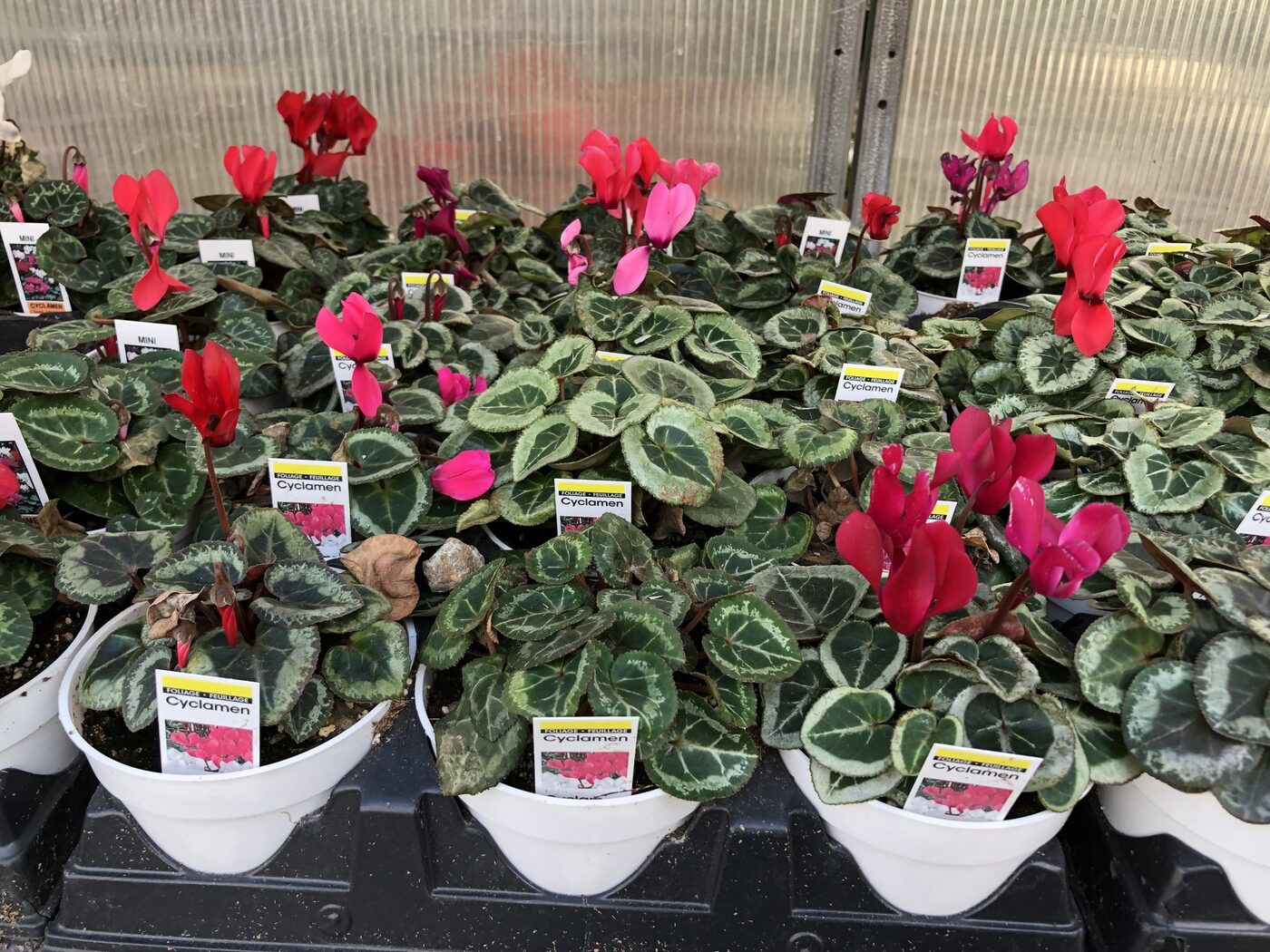
Cyclamen are small flowering plants grown from a tuber, with swept-back blooms in pink, red, purple, or white and heart-shaped leaves, often marked with silver. Florist types are grown as cool-season houseplants, and they bloom in winter before going dormant for the summer. Hardy species can live outdoors in a shade garden in cold-winter climates. Give them bright, indirect light, cool air, and a drink when the soil surface starts to dry, keeping water off the crown. Once the leaves fade after bloom, ease off on watering and let the tuber rest.
The genus Cyclamen includes about 23 species of tuberous plants in the primrose family (North Carolina State Extension). Florist types, mainly Cyclamen persicum, are grown as cool-season houseplants. Hardy species can live outdoors in a shade garden.
The care you give them depends on whether you have a florist cyclamen or a hardy outdoor species.

Cyclamen plant basics
Cyclamen is a flowering plant with pink, purple, red, or white blooms and green, heart-shaped leaves, often marked with silver. Some types are grown mainly as indoor houseplants, while cold-hardy species can be grown outdoors in the garden.
Florist cyclamen are popular houseplants because they bloom in winter. North Carolina State Extension lists Cyclamen persicum at about 6 to 9 inches tall and wide, though size varies by species.
Cyclamen persicum usually goes dormant after the bloom period. The leaves fade and drop, and many people throw the plant out, thinking it has died. University of Wisconsin Extension says florist cyclamen typically go dormant for two to three months in late spring and summer. Reduce watering and fertilizer as the leaves fade, and do not keep the pot soggy while it is leafless. You can also lift the withered tuber and store it in dry vermiculite at about 50°F (10°C) for 6 to 12 weeks, then pot it again with the upper half of the tuber above the mix and resume watering when new leaves appear.
There are two main groups: florist cyclamen and cold-hardy cyclamen. Hardy Cyclamen types have smaller flowers and are better adapted to life outdoors. North Carolina State Extension lists Cyclamen hederifolium as hardy in USDA zones 5 to 9, which means some hardy species can survive well below 0°F (-18°C).
Popular species of Cyclamen
There are about 23 species of Cyclamen (North Carolina State Extension). Each one is a little different.
Here are some of the most popular ones:
- Cyclamen persicum (florist cyclamen): indoor plant with pink, red, violet, or white flowers
- Cyclamen hederifolium: hardy, with white or pink flowers
- Cyclamen coum: hardy, with white, pink, or magenta flowers and silver-marked leaves
Light requirements for Cyclamen plants
Give cyclamen bright, indirect light (University of Wisconsin Extension). Direct sun can burn the leaves. An east window is often a good indoor spot. Outdoors, hardy cyclamen are typically quite tolerant of shade and are a nice choice for a flowering plant in the shade garden.
Indoors, Cyclamen plants may benefit from a bit of supplemental lighting. While these plants are tolerant of low light conditions indoors, they do need some light to photosynthesize and create the energy required for those beautiful blooms! Add a simple LED plant lightbulb or group the Cyclamen together with other houseplants under a bigger plant light.
Watering Cyclamen plants
Water Cyclamen whenever the soil feels dry down to an inch below the surface. Make sure the excess water can drain out of the pot.
When you water, keep the water off the leaves and the crown of the tuber, which can rot if it stays wet (University of Wisconsin Extension). The easiest way is to water from the bottom: fill a sink or saucer and let the soil wick up moisture through the drainage hole, then pour off any water that remains.
Ambient temperature for Cyclamen plants
Florist cyclamen want cool air, not a warm living room. University of Wisconsin Extension recommends daytime temperatures of 60 to 65°F (16 to 18°C) and nights around 50°F (10°C), although modern hybrids can handle a wider range. These florist types are frost tender and are only winter hardy in about USDA zones 9 to 11 (North Carolina State Extension).
Do not let a florist cyclamen freeze, and do not bake it near a heat vent or in a hot window. Hardy cyclamen, on the other hand, can live outdoors through cold winters. Hardiness varies by species: C. hederifolium is listed for USDA zones 5 to 9 (North Carolina State Extension).

Indoor humidity for Cyclamen plants
Cyclamen plants like moderate to high humidity. When these flowers are blooming in the winter, the indoor humidity isn’t enough for them. To help give them the humidity they need, try using a humidifier to bring the surrounding air humidity level up.
One thing to avoid is misting your Cyclamen. This practice does more harm than good for this plant, because it may cause rotting or fungal disease. Do not mist your Cyclamen (even if some of your other houseplants seem to enjoy it). A whole-room or whole-house humidifier is a better option.
Potting mix for Cyclamen
Cyclamen need well-drained soil. A soggy mix can lead to tuber rot (North Carolina State Extension). Most high-quality potting mixes drain well, especially if they contain perlite.
They also do well in a slightly acidic to neutral mix (North Carolina State Extension). If you want to acidify a basic potting mix, sphagnum peat can lower the pH. It does not raise it.
Cyclamen plant fertilizer
Potted cyclamen need regular feeding while they are in active growth. Outdoor plants in the ground may need only an occasional feeding.
Use a fertilizer labeled for outdoor flowering plants on in-ground hardy cyclamen, and a houseplant fertilizer for potted plants. University of Wisconsin Extension recommends a low-nitrogen fertilizer or a houseplant food for blooming plants about every two weeks when the plant is growing actively, and cutting back once dormancy starts. Too much fertilizer can produce soft, lush growth that is more prone to problems. Follow the label on the product you choose.

Planter pots for Cyclamen
Choose a pot large enough for the tuber, but only a little wider than the tuber itself. Over time the tuber will grow, and you will need a larger pot. When you repot, set the tuber so the upper half sits above the mix (University of Wisconsin Extension).
The pot also needs drainage holes. Without them, the soil stays too wet and the tuber can rot. If your decorative planter has no hole, leave the plant in the plastic nursery pot and set that inside the cachepot, then lift it out to water at the sink.
Common pests affecting Cyclamen plants
Cyclamen can be targeted by a few annoying pests. The most common are spider mites and aphids. Spider mites are tiny pests that gather on the flowers and new leaves. Insecticidal soap, or an insecticide labeled for houseplants, can help (University of Wisconsin Extension). Plants infested with cyclamen mite, which is a different pest, are often best discarded.
Another pest to be aware of are aphids. Like spider mites, aphids are small bugs that will infest your cyclamen plant. They like to eat the new growth on the plant. Aphids drink the sap from these plants, weakening them and also spreading diseases.
There are many ways to get rid of aphids. Insecticidal soap or an insecticide labeled for houseplants can work (University of Wisconsin Extension). You can also try non-chemical methods, like releasing ladybugs, which eat aphids.
Common diseases affecting Cyclamen plants
The most common problem I see is rot, especially when the crown or tuber stays wet. Overwatering, and watering over the leaves, are the usual causes (University of Wisconsin Extension, North Carolina State Extension).
Do not overwater, and pick off dead leaves and spent blooms so moisture does not sit on the plant.
FAQs about cyclamen
What is the difference between florist cyclamen and hardy cyclamen?
Florist cyclamen, usually Cyclamen persicum, are frost-tender houseplants that bloom in winter and then go dormant for the summer. Hardy species such as Cyclamen hederifolium can live outdoors in a shade garden, and some are hardy into USDA zone 5.
How do I care for a cyclamen after it stops blooming?
As the leaves fade, reduce watering and stop fertilizing. The plant is going dormant, not dying. You can leave the tuber in a barely moist pot, or lift it and store it dry at about 50°F (10°C) for 6 to 12 weeks, then pot it again with the top of the tuber exposed and resume watering when new leaves appear.
Why are my cyclamen leaves turning yellow?
Yellow leaves at the end of the bloom season often just mean dormancy is starting. During the growing season, yellow leaves can also mean the pot was kept too wet or too dry, or the plant got too warm.
Are cyclamen poisonous?
The tubers are poisonous if eaten. North Carolina State Extension notes that they can cause severe digestive trouble, so keep the plants where they will not be chewed or sampled.
Where to buy plants online
These nurseries ship well-rooted plants and stand behind them.
- Nature Hills Nursery: the largest online nursery in the US
- Plant Addicts: perennials, shrubs, and trees with a plant guarantee
- Botanical Interests: flower seeds for the beds you plan yourself
Some links earn me a commission at no cost to you. As an Amazon Associate I earn from qualifying purchases.




Leave a Reply