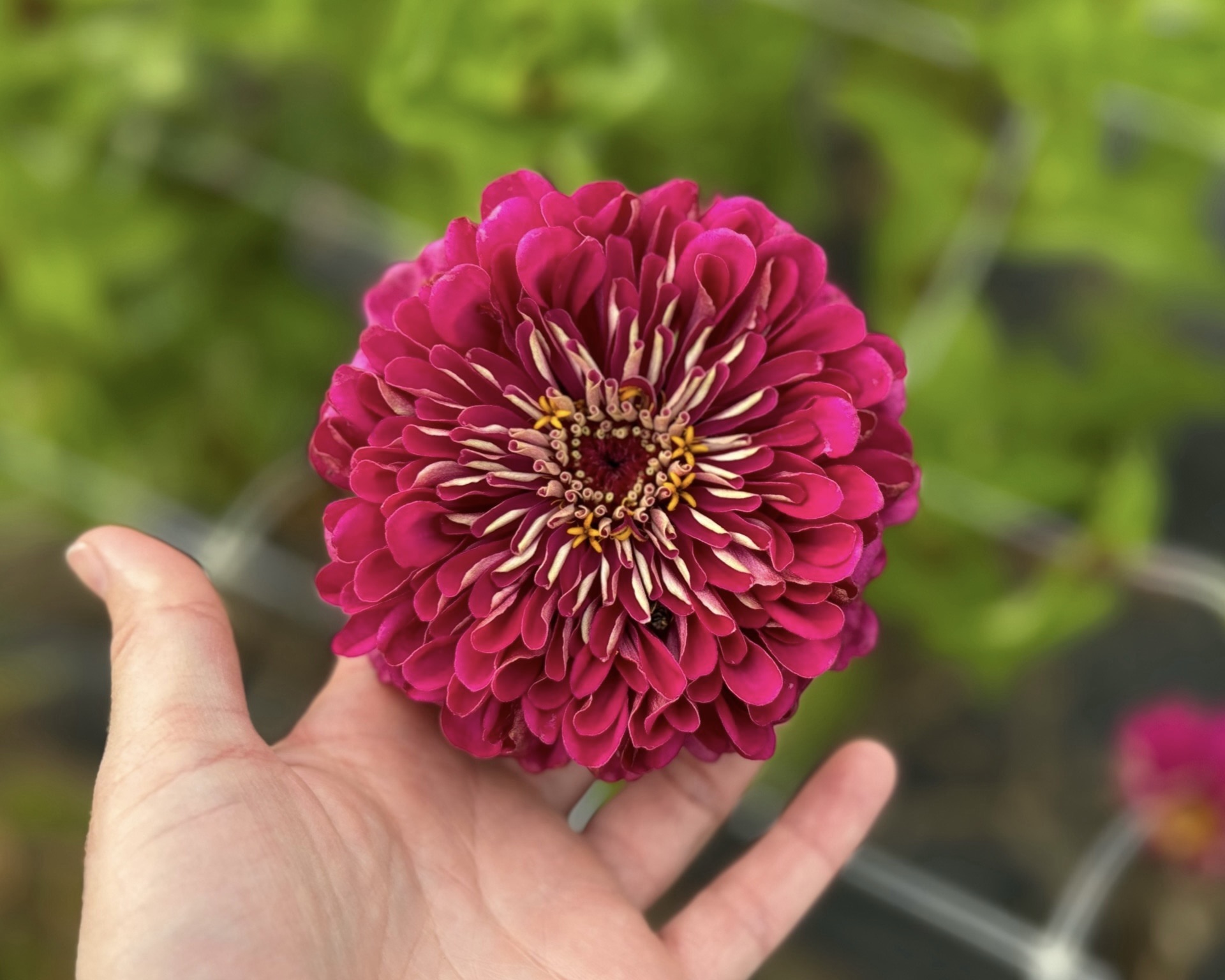
Zinnias are colorful annuals that grow best in full sun, well-drained soil, and warm temperatures. Sow seeds directly outdoors after the last frost, or start them indoors 4–6 weeks earlier. Plant seeds 1/4 inch deep and space 6–18 inches apart, depending on variety. Expect germination in 5–7 days followed by blooms in 60–75 days.
Once the seeds have sprouted, water regularly with drip lines. Avoid overhead watering to prevent mildew in the foliage. Taller types like ‘Benary’s Giant’ need more spacing and may benefit from staking. Deadhead spent flowers to encourage more blooms. Zinnias thrive with monthly feeding and make excellent cut flowers for bouquets.

Planting zinnias
Zinnias can be started from seed or you can buy seedlings from the garden center. Here’s some tips for each method.
Direct seeding outdoors
Zinnias grow quickly and do best when sown directly into warm garden soil. Wait until after your last frost date and when the soil has warmed to at least 60°F (16°C). Choose a sunny spot with well-draining soil. Loosen the soil and mix in compost if needed. Sow seeds ¼ inch deep and 6–12 inches apart, depending on the variety. Water gently after planting. Thin seedlings to proper spacing once they sprout, usually within 5–7 days. Expect flowers in 60–75 days.
Starting seeds indoors
To get a head start, sow zinnia seeds indoors 4–6 weeks before your last frost. Use seed trays with a light potting mix. Sow seeds ¼ inch deep and keep them at 70–75°F (21–24°C) until germination. Use a grow light or sunny window for strong seedlings. Once they have two sets of true leaves, transplant to larger containers if needed. Harden off seedlings outdoors for 7–10 days before transplanting into the garden.
Transplanting seedlings from the nursery
If you buy zinnia seedlings, plant them after your last frost date. Choose young, healthy plants without flowers yet, so they focus on root growth. Space them 6–18 inches apart based on their mature size. Dig a hole slightly larger than the root ball, gently remove the seedling from its container, and plant it at the same depth. Water well after transplanting. Mulch around the base to retain moisture and suppress weeds.
Watering
Zinnias need consistent moisture to thrive but hate soggy soil. Water deeply when the top inch of soil feels dry. Aim for about 1 inch of water per week, either from rainfall or manual watering. Try to water at the base of the plant to avoid wetting the leaves, which helps prevent mildew and fungal issues.

Sunlight
Zinnias love full sun. They need at least 6 hours of direct sunlight daily. The more sun they get, the better the blooms and the stronger the stems. If your plants look leggy or lean toward the light, they may need more sun.
Fertilizing
Zinnias aren’t heavy feeders, but a bit of balanced fertilizer can help boost growth. Use a general-purpose fertilizer about every month (or whatever the package recommends). Too much nitrogen can cause lots of leaves but fewer flowers, so don’t overdo it. If your soil is already rich, you may not need extra feeding.
Deadheading and pruning
Regular deadheading (removing spent blooms) helps zinnias produce more flowers. Use clean scissors or pinch off the faded blooms above a leaf node. For bushier plants, pinch back the tips of young plants when they are about 6 inches tall. This encourages branching and more flower production.
Mulching and weeding
Apply a light layer of mulch around the base of the plants to retain moisture and suppress weeds. Avoid piling mulch against the stems. Hand-weed as needed to reduce competition for nutrients and water.
Pest and disease control
Zinnias can attract pests like aphids, spider mites, and Japanese beetles. Use insecticidal soap or a strong spray of water to remove pests if needed. Watch for powdery mildew, especially in humid conditions. Space plants well, water at the base, and remove infected leaves promptly. Choose mildew-resistant varieties when possible.
Support for tall varieties
Some taller zinnias (like ‘Benary’s Giant’) may benefit from staking if exposed to wind or heavy rain. Use bamboo stakes or flower supports early on to prevent flopping later.

Harvesting zinnia flowers
Cut zinnias in the early morning when the stems are fully hydrated. This helps reduce wilting. Avoid cutting in the heat of the day, as the plants will be stressed and the flowers may not hold up well in a bouquet.
Before cutting a stem, gently hold it a few inches below the flower head and give it a little wiggle. If the stem stays straight and firm, it’s ready to cut. If it bends or flops, it’s too young and won’t last well in the vase. Wait a day or two for it to mature.
Use sanitized garden shears or scissors to cut the stems. Cut at a 45-degree angle to increase the surface area for water uptake. This helps keep the flowers fresh longer.

Bring a clean bucket or jug of water with you to the garden and put the stems directly into it after cutting. Keep them in a shady, cool place for a few hours to let them hydrate fully before arranging.
Let your cut zinnias sit in cool water for at least 2–4 hours (ideally overnight) before arranging. This step helps ensure the flowers are fully hydrated and firm.
Always use a clean vase. Fill it with lukewarm water. Remove all leaves that will sit below the water line in the vase. Leaves left underwater can rot and cause bacteria buildup, which shortens the life of your bouquet.
Change the water every 1–2 days and re-cut the stems to help extend vase life. If a zinnia stem begins to wilt, recut the stem and place it in hot water (about 110°F) for 30 seconds, then transfer it back to cool water. This can help revive it.
With proper cutting and care, zinnias can last 5–7 days in a vase, sometimes longer. They’re among the best summer flowers for cutting, thanks to their sturdy stems, bold colors, and long vase life.




Leave a Reply