Many gardeners want two things at once. They want a garden that looks beautiful, and they want a garden that helps bees, butterflies, and other pollinators. For years, the usual advice has been simple: plant wild-type native plants, and skip the cultivated versions. But a new 2026 study adds more nuance to that advice.
The main finding is clear. Wild native plants were still the best for pollinators overall. But some cultivated varieties also attracted pollinators at similar rates, which means home gardeners may have more good options than they thought. That does not mean every cultivar is a good pollinator plant. Some are, some are not, and the details matter.
For home gardeners, that is useful news. It means a tidy front yard, a smaller city lot, or a more designed flower border does not have to be off limits if you want to support pollinators. It also means plant choice matters more than labels alone. A plant being called “native” or “pollinator-friendly” does not tell the whole story. The exact cultivar matters. And the research is just beginning.
What the study looked at
The study, Evaluating cultivars for pollinator gardens, was published in the journal Ecosphere in 2026. It was led by researchers from Northwestern University (along Lake Michigan) and the Chicago Botanic Garden. You can read the paper here: https://doi.org/10.1002/ecs2.70566.
What makes this study more useful than a quick garden trial is its design. The researchers did not only watch plants in one display garden for a few weeks. They used two datasets. One came from a two-year common garden trial at the Chicago Botanic Garden. The other came from a five-year community science project in gardens across eastern North America. That gave them a way to test whether results held up beyond one carefully managed research site.
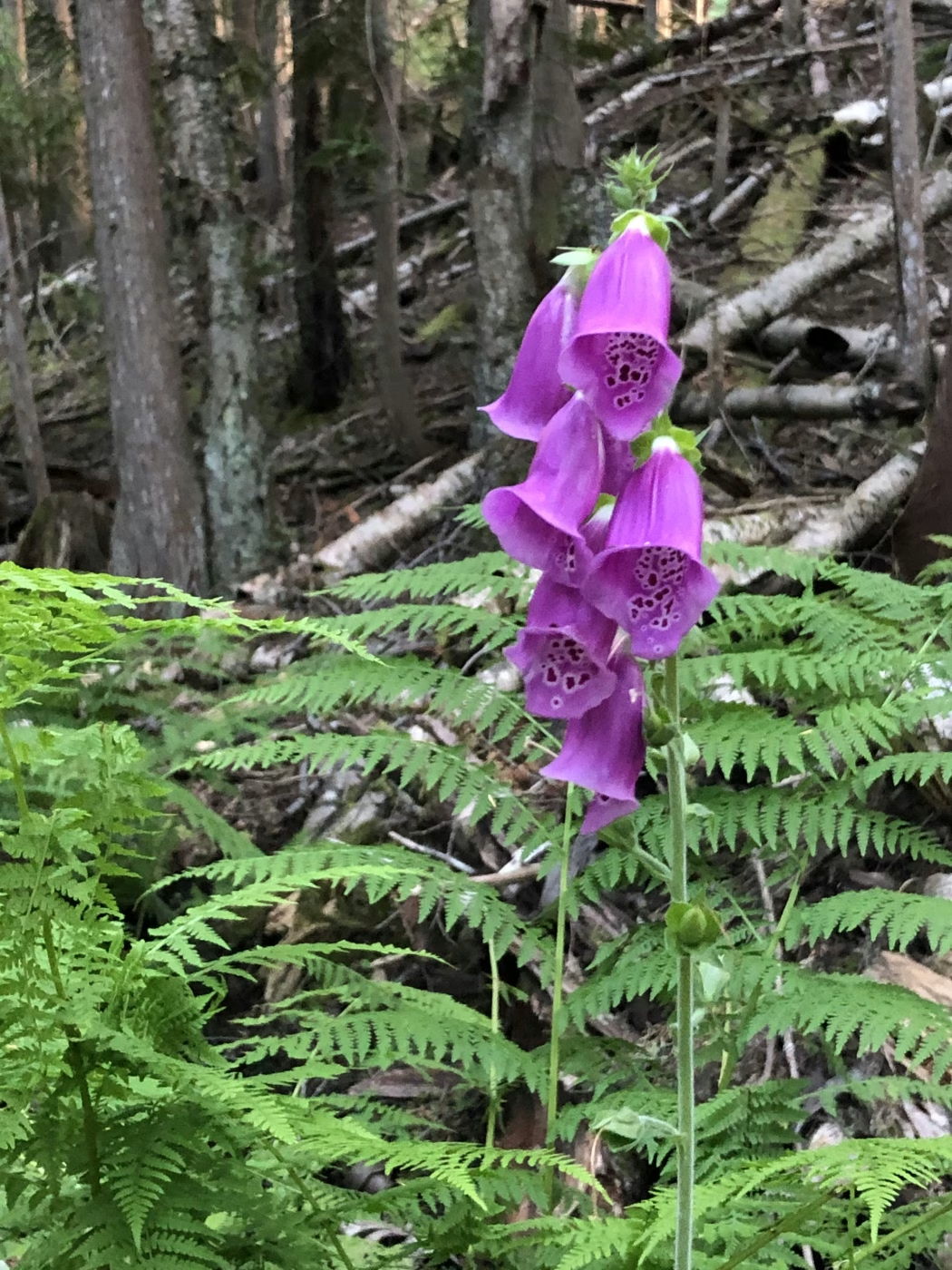
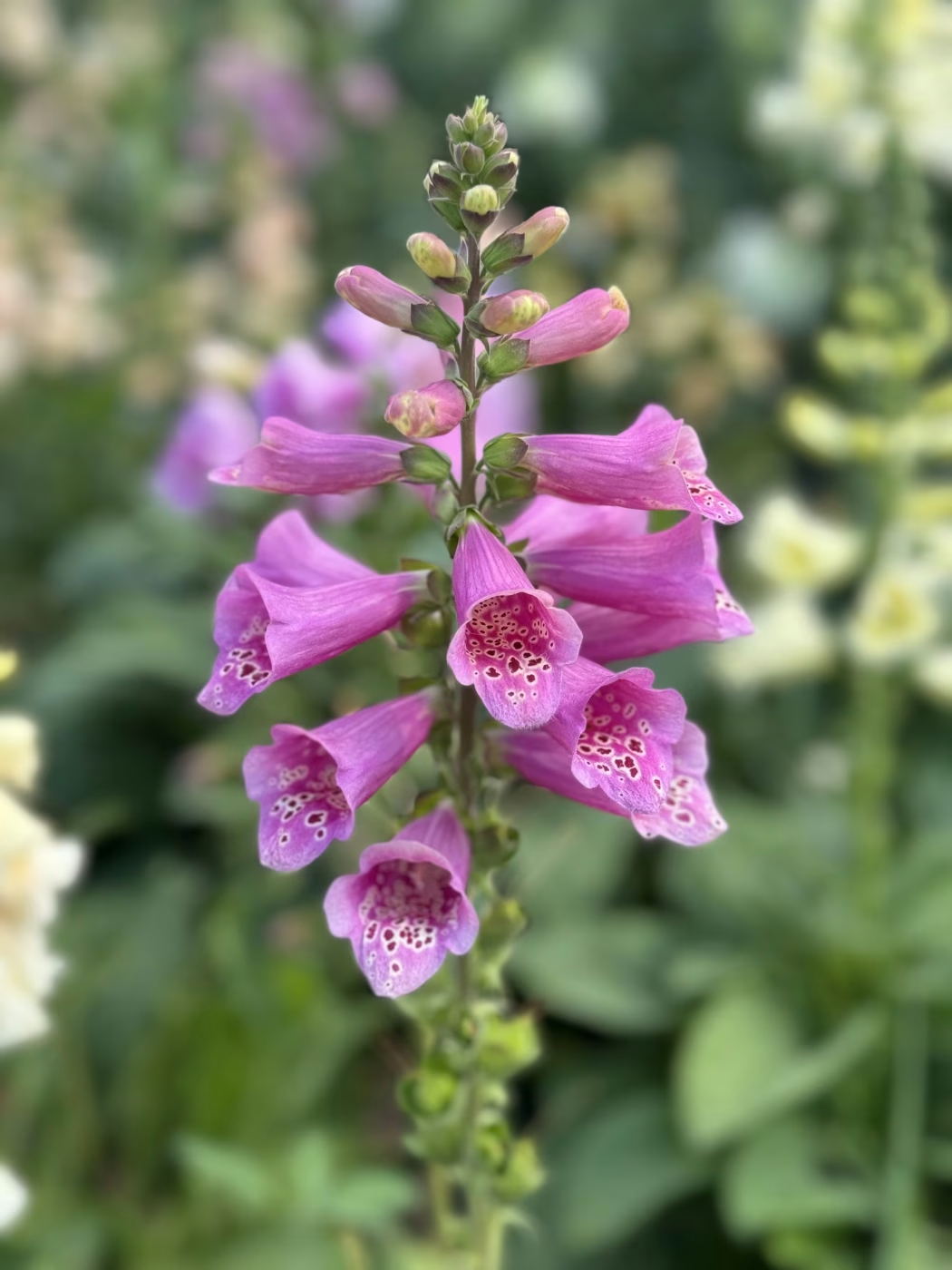
The researchers compared four native perennial species against 13 popular cultivated varieties of those species. The four species were foxglove, black-eyed Susan, New England aster, and aromatic aster. They then measured pollinator attractiveness in two ways. First, they looked at visitation rate, which means how many insect visits each plant received during timed observation periods. Second, they looked at morphogroup richness, which is a broad measure of how many different kinds of pollinator groups visited.
The big takeaway for gardeners
The biggest takeaway is that wild-type plants remain the safest and strongest choice when your goal is to attract flower-visiting insects. The paper states that “wild-type plants were consistently the most attractive”.
That is the foundation. If you can find and buy true wild-type native plants suited to your region, they remain the best first choice for a pollinator garden.
But the second takeaway is what makes this study practical for everyday gardeners. Some cultivars performed closely enough to wild type that the authors recommended them for pollinator-oriented plantings. That matters because wild-type natives are often harder to find at regular garden centers, and many gardeners want traits like shorter height, tidier form, or more controlled habit.
So the study does not say, “all cultivars are fine.” It says something more useful: evaluate cultivar by cultivar, because some work well and some do not. We will continue to gather more data on which cultivars are best for pollinators now that this research is beginning.
Why this matters in the real world
Many home gardeners do not shop from specialty native plant nurseries. Some of these native plant nurseries are not even open to the public, and serve only landscape designers and habitat restoration and reclamation scientists.
Most home gardeners shop from local garden centers, box stores, mail-order catalogs, or spring plant sales. In those places, wild-type natives can be hard to find. Cultivars are often much easier to buy. They are also often bred to fit the way home gardeners actually use plants.
They may be shorter, bushier, more uniform, longer blooming, or a specific color. That does not make them better for pollinators. But it does make them more likely to get planted. And having a living plant in your outdoor space is almost always better than having a fake plastic one or nothing at all.
And so, a decent pollinator plant that actually gets planted can do more good than a perfect plant that never makes it into the garden. The paper supports that middle-ground idea, while still keeping wild-type plants as the top standard.
The plants in the study
The researchers evaluated these native species and their cultivars:
Foxglove beardtongue
Penstemon digitalis (wild native species plant) vs. garden cultivars ‘Husker Red’, ‘Pocahontas’, and ‘Blackbeard’.
Black-eyed Susan
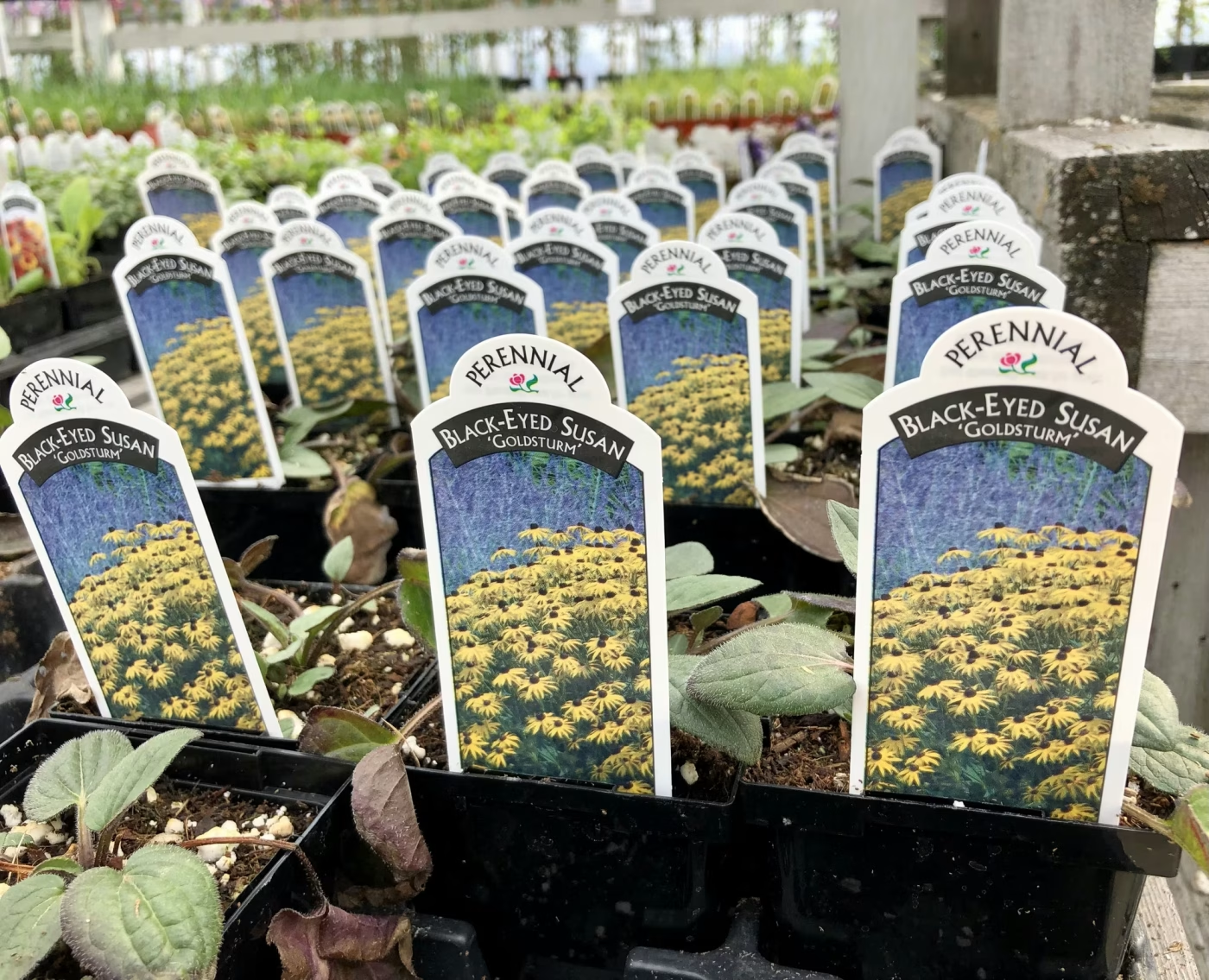
Rudbeckia fulgida (wild native species plant) vs. garden cultivars ‘Goldsturm’, ‘Little Goldstar’, ‘Viette’s Little Suzy’, and ‘American Gold Rush’.
New England aster
Symphyotrichum novae-angliae (wild native species plant) vs. garden cultivars ‘Andenken an Alma Potschke’, ‘Vibrant Dome’, and ‘Purple Dome’.
Aromatic aster
Symphyotrichum oblongifolium (wild native species plant) vs. garden cultivars ‘October Skies’, ‘Raydon’s Favorite’, and ‘Dream of Beauty’.
Which cultivars worked best
The strongest practical value in this paper is that it names specific cultivars that held up well in both the botanic garden trial and the wider community science project. That means the authors were willing to make real planting recommendations for those selections.
For home gardeners, the best-performing cultivars from the study were:
Foxglove beardtongue cultivars worth noting
Penstemon digitalis ‘Pocahontas’
Penstemon digitalis ‘Husker Red’
These were recommended in the study by the authors as comparable to wild type for attracting flower-visiting insects. For gardeners, that is useful because ‘Husker Red’ is already a well-known ornamental with burgundy foliage, and it is often easier to find than straight wild-type plants.
Black-eyed Susan cultivars worth noting
Rudbeckia fulgida ‘Goldsturm’
Rudbeckia fulgida ‘Viette’s Little Suzy’
This is one of the most useful parts of the study for average gardeners because ‘Goldsturm’ is so widely sold. It was noted to exhibit similar attractiveness to the native wild type. And many gardeners already grow ‘Goldsturm’. The study suggests that this common cultivar can still play a meaningful role in a pollinator garden.
Aromatic aster cultivar worth noting
Symphyotrichum oblongifolium ‘October Skies’
The authors recommended this cultivar alongside the wild type. Aromatic asters are valuable late-season plants, and late bloom is one reason they matter so much in pollinator gardens.
Which cultivars did not do as well
Not every cultivar matched the wild type. Some underperformed.
The paper and news coverage both point to examples like these:
Penstemon digitalis ‘Blackbeard’
Rudbeckia fulgida ‘American Gold Rush’
Symphyotrichum novae-angliae ‘Andenken an Alma Potschke’
This is one reason the study matters. Without side-by-side evaluation, a gardener could easily assume that any cultivar of a good native species would also be a strong pollinator plant. The evidence says that assumption is not safe.
An important finding about New England aster
For New England aster, the authors were more cautious. They recommended the wild type over the cultivars they tested. That is a strong signal for gardeners. If your main goal is pollinator support, and you are choosing among New England asters, the straight species is the better bet based on this study.
This also fits a broader pattern many gardeners already notice in native plants. Some compact or mounded cultivars are easier to place in a formal border, but those changes in plant habit can also change what pollinators experience when they visit the flowers.
No cultivar beat the wild type
One of the most useful lines in the whole paper is that “no cultivar outperformed its wild-type counterpart”.
That sentence helps keep the findings grounded. The study does not overturn the case for wild-type natives. It refines it. Wild-type plants still came out on top. Some cultivars were acceptable substitutes in some cases. None proved better than the original wild form.
That is a good way to think about cultivars in a pollinator garden. They may sometimes be good substitutes. They are not the new gold standard.
Why some cultivars may work, and others may not
The researchers discuss several reasons cultivars may differ in attractiveness.
Floral display size
Plants with larger floral displays often attracted more pollinators. That makes sense in a garden. Bigger flower displays are easier for insects to spot, and they may also provide more reward in one stop.
Flower traits
Small changes in traits like flower color, flower height, scent, ultraviolet reflectance, and shape may change how attractive a flower is to insects. Some of these differences are visible to gardeners. Others are not. A cultivar may look almost the same to us, while appearing different to a bee.
Floral resources
The visual flower is only part of the story. Pollinators are responding to rewards too. Nectar and pollen matter. If breeding changes the amount, accessibility, or quality of those resources, a cultivar may draw fewer visitors.

Why double flowers are still a poor choice
This study did not test double-flowered cultivars. That is important. None of the cultivars in the study had doubled inflorescences. So gardeners should not use this paper to defend double flowers in pollinator plantings.
In fact, the paper repeats a familiar warning from past research. Double flowers often provide few or no usable floral resources for pollinators. So if your goal is to support bees and butterflies, double-flowered forms are still one of the clearest things to avoid.
That is one of the easiest shopping rules a home gardener can use. If the flower looks heavily packed with extra petals, skip it for pollinator purposes.
Why the study feels more trustworthy than many plant lists
Many online plant lists are based on repeated claims, not on direct comparison trials. This study stands out because it used a structured method and timed observations. Researchers and trained volunteers watched plants for 10-minute periods and counted visits from broad groups of insects, including bumble bees, honey bees, butterflies, moths, beetles, and others.
Even better, the study found that results from the botanic garden aligned with results from the wider home garden setting. In other words, plants that looked better in the formal trial also tended to look better in real gardens. That gives gardeners more reason to trust the short list of recommended cultivars.
What this means for a home pollinator garden
If you are starting from scratch, the simplest approach is still the best one. Use wild-type native plants whenever you can find them. Add a long bloom season. Include spring, summer, and fall flowers. Plant in groups. Keep something blooming as much of the season as possible.
But if you cannot find the straight species, or if your garden needs more compact, tidier plants, this study gives you a more practical next step. Choose cultivars that have actually been shown to perform well, rather than assuming all cultivars are equal.
That is a more realistic path for many home gardeners. It also lowers the barrier to getting started.
A good way to use cultivars without losing the plot
One of the best ways to apply this study is to think in layers.
Let wild-type natives form the backbone of the planting whenever possible. Then use selected cultivars as supporting plants where you need specific traits like shorter height, stronger foliage color, or better fit in a front-yard design. So you might put the taller native plants in the backdrop and middle layer, while the cultivars bred to be more compact and floriferous can go right up front (where they can be seen best anyways).
That approach protects the ecological strength of the planting while still making room for the realities of home landscapes, neighborhood expectations, plant availability, and personal taste. For many gardeners, that will be more sustainable than trying to make the entire garden look like a restoration project.
What the study does not prove
This paper is strong, but it has limits, and those limits matter.
- It does not prove that all cultivars of native plants are good for pollinators.
- It does not prove that cultivars are equal to wild types in every way.
- It does not prove that cultivars are the right choice for ecological restoration.
It does not fully answer questions about which exact insect species are using each plant, how well those insects reproduce afterward, or how plant choices affect the broader ecosystem over time.
The authors are careful about that. Their findings are most useful for gardens where the goal is attracting flower-visiting insects. That is a home gardening use case. It is not the same as restoring a natural habitat or preserving wild plant genetics.
Practical shopping advice based on this study
If you want to use this research when buying plants, here is the most useful way to think about it.
Best first choice
Buy the wild-type native plant when you can find it, and when it fits your garden.
Good second choice
Use cultivars that have been tested and recommended, such as ‘Husker Red’, ‘Pocahontas’, ‘Goldsturm’, ‘Viette’s Little Suzy’, and ‘October Skies’.
Use more caution
Be skeptical of cultivars with major changes in height, flower form, or heavy breeding for ornamental traits, unless you can find real evidence behind them. And avoid double-petal flowers in pollinator gardens for the simple reason that pollinators can’t easily access the pollen-bearing parts of the plant due to all the petals.
Why this study is encouraging
For many home gardeners, the most encouraging part of this study is not that some cultivars worked well. It is that the gap between ecological gardening and ornamental gardening may not be as absolute as many people feared. You do not have to choose between a beautiful yard and a useful one. But you do have to choose plants somewhat carefully.
That is a hopeful message because careful plant choice is something gardeners can actually act on. It is easier to swap one cultivar for a better one than to completely change your whole landscape style. Good research like this gives gardeners a path forward that is both practical and evidence-based. We love science!



Leave a Reply