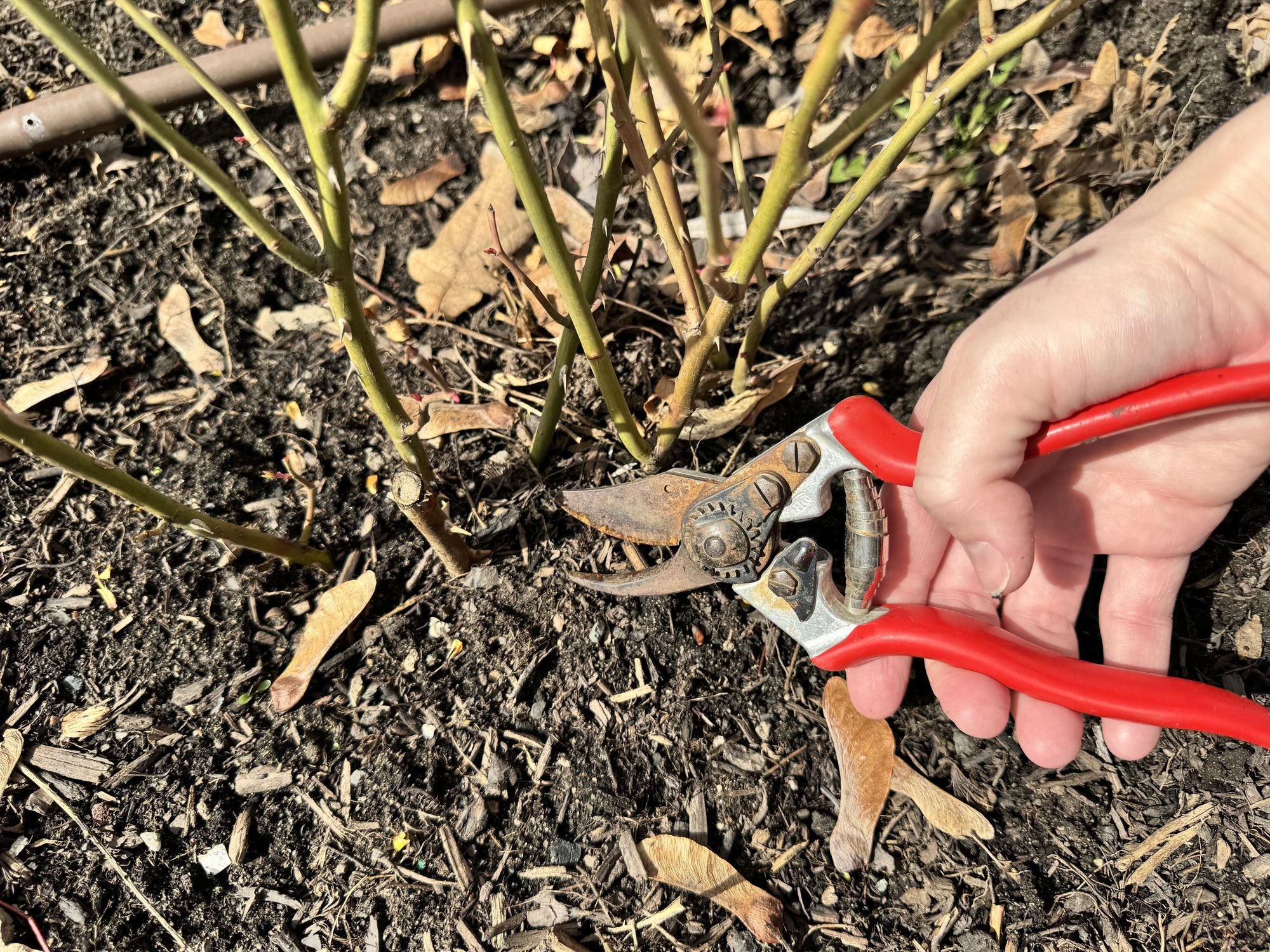
March is a common time to prune roses. But timing is not strictly tied to the calendar. Prune when the worst cold has passed and the buds are starting to swell, usually late winter through early spring. In many gardens, that lines up with March. If your roses are still fully dormant and hard freezes are still likely, wait. If buds are swelling and you can see nice green canes, its time for an early spring trim.
Why March pruning works for many roses
Most repeat-blooming garden roses flower best on strong new growth. Pruning in late winter to early spring pushes that new growth, removes winter damage, and improves airflow through the plant. March is often the point where you can see what survived, which canes are dead, and where the plant is ready to grow. That makes it easier to make clean decisions instead of guessing in midwinter. Its also much easier to see the shape of the plant with the leaves out of the way.
Pruning now helps with disease pressure later. Roses with crowded center areas hold moisture, which can encourage fungal problems like black spot and powdery mildew. Opening the structure before leaves fully expand gives the plant a cleaner start (and its easier to see what is happening). If you are also planning spring feeding, pruning first helps you fertilize the plant you actually have, not the plant you hoped overwintered. For related timing, see when to prune roses and fertilizing roses in spring.

How to tell it is time in your garden
Use plant cues first. Swelling buds on canes, a hint of red or green at nodes, and canes that flex instead of snapping all point to active growth starting. If you can scratch the bark lightly with your thumbnail and see green tissue underneath, that cane is alive. If the interior is brown and dry (see photo below), it is dead and can be totally removed at any point (sooner rather than later).
Weather matters more than air temperature on one afternoon. If your forecast still includes repeated hard freezes, keep pruning light. You can remove dead and broken canes any time, but save your overall shaping cuts until the coldest stretch is past. In USDA Zone 4 to 6 gardens, that often means later in March or even early April. In USDA Zone 7 to 9, early March pruning is common, and in warmer climates it may already be late if roses broke dormancy in February.

Tools and prep that make pruning cleaner
Sharp tools prevent tearing. A pair of bypass hand pruners covers most cuts. Loppers help with thicker canes, and a small pruning saw is useful for old woody bases. Wear thick gloves and long sleeves because thorns will find bare skin fast. If you have canes with dieback or obvious disease, wipe blades with rubbing alcohol between plants and also after cutting questionable sections so you do not spread problems.
Have a place like a wheelbarrow, tarp, or bin to toss cuttings as you work. Removing pruned material from the bed keeps you from stepping on thorns, and it reduces the chance that infected leaves or canes stay near the plant. If last year’s leaves are still trapped in the canopy or sitting under the plant, clean them out before new growth thickens. That simple cleanup of moisture-holding material around the base can matter as much as the cuts.

The basic spring pruning sequence for most roses
Start with cuts you will not regret. Dead wood, broken canes, and canes rubbing hard against each other do not help the plant, and removing them early clarifies the structure. After that, you can decide how much to shorten remaining canes to shape the plant and encourage flowering.
- Remove dead canes back to healthy green tissue, cutting to a node or all the way to the base if the cane is dead throughout.
- Cut out weak, spindly growth that will not support good blooms, especially thin canes growing from the center.
- Remove crossing canes and anything growing toward the center so air can move through the plant.
- Shorten remaining canes to an outward facing bud so new shoots grow away from the center, keeping a vase-like shape on many bush roses.
- Make each cut about 1/4 inch above a bud at a slight angle if you can so water sheds off the cut surface.
How far you shorten the plant depends on the rose type and your goals. A harder prune gives fewer, larger blooms and a smaller plant. A lighter prune gives more blooms and a larger plant. If you are not sure, aim for moderate pruning. Remove the worst canes, open the center, and reduce height by about one third. You can always take more off, but you cannot put it back once the cut is made.

How early spring pruning changes by rose type
Before you cut hard, identify whether your specific rose cultivar flowers on new wood or on last year’s canes. If you inherited the plant and do not know its type, a cautious approach is safer until you observe when it blooms (unless you don’t mind possibly losing one season’s blooms).
Hybrid tea, grandiflora, and floribunda roses usually take spring pruning well. These are typically pruned harder than landscape shrubs. In March, remove the oldest thick canes if the plant is crowded, keep three to six strong canes, and shorten them to a healthy outward bud. This concentrates energy into strong flowering shoots. If you prefer a taller plant with more, smaller blooms, prune less and focus on thinning rather than shortening.
Shrub roses and many modern landscape roses are best handled with thinning and light shaping. In March, take out dead wood and remove a few of the oldest canes at the base to keep the plant renewing itself. Then shorten the rest just enough to control size and remove winter dieback. Many shrub roses look best when you keep their natural form instead of forcing a tight vase shape.
Climbing roses are pruned differently because the long canes are the framework. Keep the main canes and remove only those that are dead, badly damaged, or too old and unproductive. Then shorten the side shoots along the main canes to a few buds to encourage flowering spurs. If you cut the main canes back hard, you can delay flowering and lose the structure you trained.
Rambling roses and many old/heritage roses set buds on older wood. If you prune them hard in the spring, you often remove the canes that would have flowered. For these, use March mainly for removing dead or broken wood. Save major shaping until right after flowering so the plant has time to grow new canes for next year’s bloom.
Miniature roses and patio roses can be treated like small shrub roses. In March, remove dead tips and thin crowded stems, then reduce height lightly. They often respond well to a simple haircut and cleanup as long as you do not strip out all growth points. Container roses dry faster and can start growth earlier in mild spells, so watch buds closely and avoid cutting when a cold snap is imminent.

What to do about winter dieback and black canes
Winter dieback often appears in early spring as blackened tips, shriveled bark, or canes that look fine outside but are brown inside. Work from the tip down. Make a cut, then check the center of the cane. If it is white to pale green and moist, you are in live wood and can stop cutting that cane. If it is tan or brown, keep cutting down until you find healthy tissue or reach the base.
If a cane is black all the way down, remove it at the base. Get rid of it! For grafted roses, cuts below the graft union can encourage suckers from the rootstock, so try to keep your cut above the graft. If you are not sure where the graft is, look for a swollen knuckle near soil level. It may be above or below the ground according to practices in your area. Any shoots emerging from below that point should be removed promptly because they can overtake the plant and flower differently.

Common early spring pruning mistakes that set roses back
Leaving the center crowded is the most common missed step. Roses can survive it, but you usually pay later with more disease and fewer good flowering stems. Another common mistake is making cuts too far above buds, leaving stubs that die back and serve as pathogen habitat. Cut close enough that the bud can take over cleanly, but not so close you damage it.
Overpruning happens when every single cane is shortened without enough thinning of entire canes back to the base. If you reduce height but do not remove crowded canes, the plant responds with a thicket of weak shoots. Thinning is often more important than shortening. Underpruning is usually safer than overpruning if you are new to roses. You can always come back in a few weeks to remove a cane that is clearly weak once new growth shows you the plant’s direction.
One more mistake is pairing pruning with heavy fertilizer too early. Fresh cuts and tender growth do not need a surge of nitrogen during unstable spring weather. Prune first, then wait until you see steady growth. Use a slow-release rose fertilizer paired with organic compost. Don’t just toss some lawn fertilizer in the rose’s general direction.
Aftercare right after you prune
After pruning, clean up all the cuttings and any old leaves around the base. Water if the soil is dry and the ground is not frozen, especially for roses in raised beds or containers. If you mulch, pull mulch back while you work so you can see the crown and avoid burying new shoots. When you finish, you can refresh mulch in a thin layer.
If deer are common where you garden, March is when browsing can start to hamper your work as new shoots appear. Physical barriers or strong repellents matter more after pruning because the fresh green new growth is easier to reach.
If you grow roses primarily for blooms, keep an eye on early aphids too. A strong spray of water is often enough when infestations are small and leaves are still unfolding. Get them early!
How March pruning fits with other rose jobs
March is also when people plant and transplant roses in many climates. If you are adding new plants, do your pruning first so you can see where the new rose fits and how much space you really have. If you are planting bare root roses, they are often pruned at planting time to balance top growth with the roots. If that is on your list this season, planting bare root roses and when to plant roses are good companion guides to an early spring pruning plan.
If you prune in March and the plant responds with strong shoots, you may not need to do much else in the trimming department until the first flush of blooms. Light touch up pruning later in spring is usually limited to removing a cane that dies back, correcting a shoot that is growing straight into the center, or taking out a damaged stem after wind. Save heavy cutting for the next dormant season unless you are renovating an old shrub rose over several years.
Where to buy plants online
These nurseries ship well-rooted plants and stand behind them.
- Nature Hills Nursery: the largest online nursery in the US
- Plant Addicts: perennials, shrubs, and trees with a plant guarantee
- Botanical Interests: flower seeds for the beds you plan yourself
Some links earn me a commission at no cost to you. As an Amazon Associate I earn from qualifying purchases.




Leave a Reply