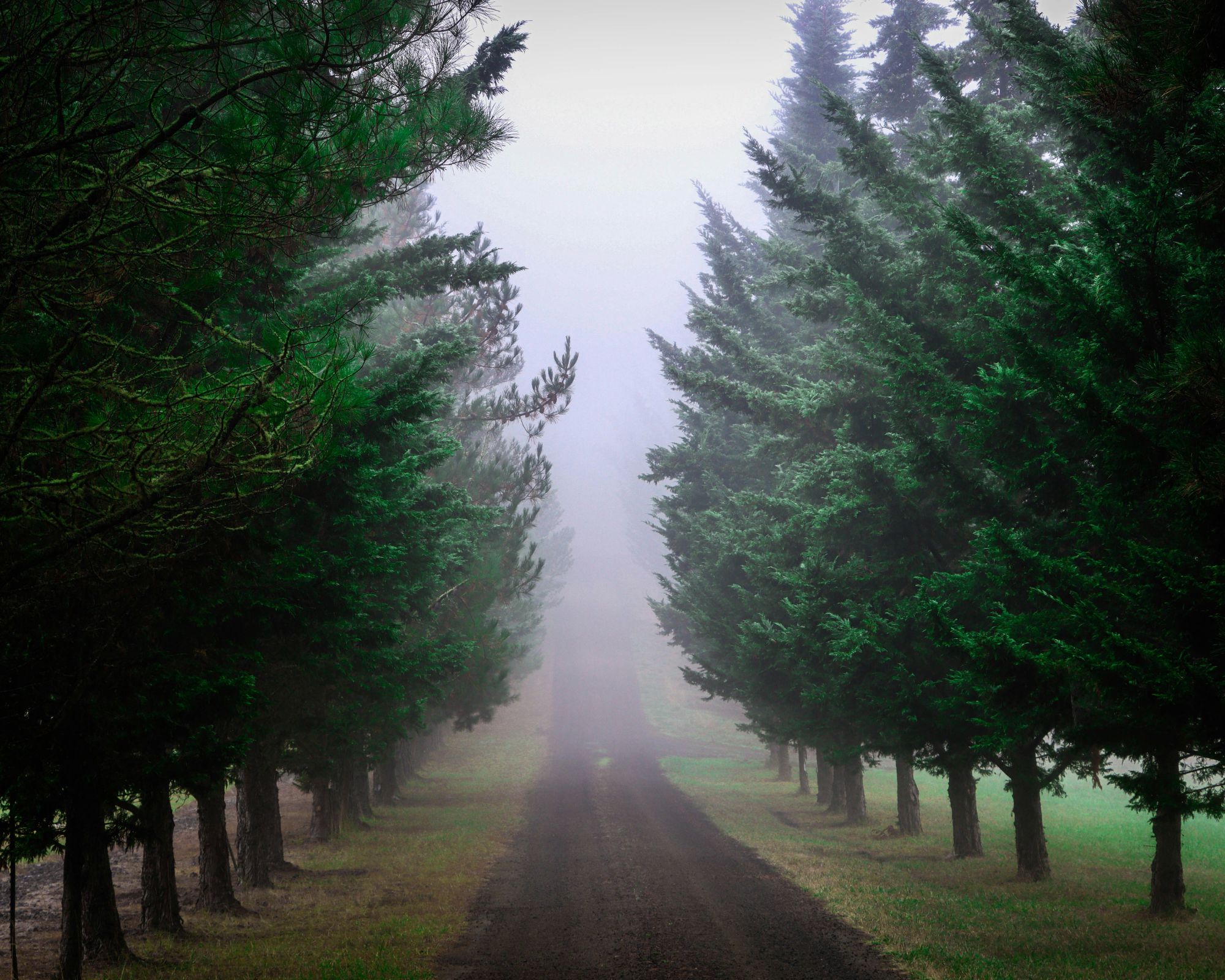
The best trees to line a driveway include flowering dogwood, crape myrtle, columnar oak, European hornbeam, Italian cypress, and green giant arborvitae.
Deciduous flowering trees like dogwood and crape myrtle add spring color. Shade trees like maple and oak provide fall foliage and summer cooling. Evergreens like arborvitae and spruce offer year-round privacy without the hassle of raking fallen leaves. Choose trees based on your climate zone, available space between the driveway and property line, and the seasonal interest you want most.
Consider three main factors when choosing driveway trees. First, measure the space between your driveway edge and property boundary. Narrow strips under 10 feet wide need columnar or upright trees. Wider areas can accommodate spreading canopies. Second, think about root systems. Some trees have aggressive roots that can crack pavement over time. Third, decide whether you want evergreen trees for year-round privacy or deciduous trees for seasonal color changes.

Dogwood
Flowering dogwood (Cornus florida) ranks among the finest ornamental trees for driveway borders. These small to medium trees offer four-season interest that few other species can match. Spring brings showy white or pink blooms that create a striking welcome. Summer foliage is lush green with distinctive layered branching. Fall color ranges from brilliant red to deep burgundy. Winter reveals elegant horizontal branch structure and colorful bark on some varieties.
Most dogwoods mature at 15 to 25 feet tall with a similar spread. This manageable size works well for narrow borders where larger trees would overwhelm the space. Their root systems are generally non-invasive, making them safer near pavement than many alternatives. Dogwoods prefer partial shade to full sun and adapt to various soil types, though they perform best in acidic, well-drained conditions.
Kousa dogwood (Cornus kousa) is an excellent alternative for areas where anthracnose disease affects native flowering dogwood. Kousa blooms slightly later in spring and produces ornamental red fruits in fall.

Crape myrtle
Crape myrtle (Lagerstroemia indica) delivers bold summer color when most other trees have finished blooming. Flower clusters appear in vibrant shades of pink, white, red, and purple, lasting for weeks during the hottest months. The smooth, mottled bark provides winter interest after leaves drop in fall. Orange and red fall foliage adds another season of color before the bark display begins.
These trees thrive in heat and tolerate drought once established. Most varieties reach 15 to 25 feet at maturity, though dwarf selections stay under 10 feet and tree-form cultivars can exceed 30 feet. The naturally upright growth habit makes crape myrtles well-suited for driveway plantings without heavy pruning. Choose disease-resistant cultivars to avoid powdery mildew problems. Ask your local Master Gardeners which varieties perform best in your climate zone.

Oak
Oak trees (Quercus spp.) bring timeless grandeur to any landscape. While standard oaks grow too large for most residential driveways, columnar cultivars offer the same beauty in a narrow footprint. Crimson Spire oak (Quercus x ‘Crimschmidt’) reaches 45 feet tall but only 15 feet wide. Regal Prince oak (Quercus x ‘Long’) has similar dimensions with excellent disease resistance.
Oaks offer a special advantage for driveway plantings: many species are marcescent, meaning they hold their dead leaves through much of winter. This retention creates a privacy screen during the coldest months when deciduous trees are bare. White oak, pin oak, and red oak all exhibit this trait to varying degrees. The russet-brown leaves eventually drop in early spring as new growth emerges.
Oak trees support more wildlife species than almost any other North American tree genus. They produce acorns that feed birds, squirrels, and deer. Their leaves host hundreds of caterpillar species that become food for nesting birds. Learn more about when to trim oak trees to maintain their health and structure.

European hornbeam
European hornbeam (Carpinus betulus) is an underused gem for driveway plantings. This refined tree offers clean lines, dense foliage, and excellent tolerance for urban conditions. The smooth gray bark resembles flexed muscle, giving rise to the common name “musclewood.” Fall color is a warm yellow to orange, and like oak, hornbeam holds many of its tan leaves through winter for added screening.
Fastigiate hornbeam (Carpinus betulus ‘Fastigiata’) grows in a tight columnar form reaching 30 to 40 feet tall and only 15 to 20 feet wide. This narrow profile makes it ideal for driveways with limited side space. The species tolerates heavy pruning and is often used in pleached hornbeam hedges for formal European-style landscapes.
Hornbeam adapts to a wide range of soil conditions including clay, sand, and compacted urban soils. It handles both sun and partial shade. Pest and disease problems are rare, making this a low-maintenance choice for busy homeowners.

Aspen
Quaking aspen (Populus tremuloides) is one of the fastest-growing trees for driveway landscaping. These slender trees can add 3 to 5 feet of height per year under good conditions, eventually reaching 40 to 50 feet tall. The narrow form, typically under 25 feet wide, fits comfortably in tight spaces.
Aspens are famous for their trembling leaves. The flattened leaf stems catch every breeze, creating a shimmering effect and gentle rustling sound. Fall color is brilliant gold, often occurring earlier than other deciduous trees. The smooth white bark provides winter interest and glows in evening light.
These trees grow best in cool climates with cold winters. They struggle in hot, humid regions. Aspens naturally spread by root suckers, which can be either a benefit or a nuisance depending on your goals. Regular removal of suckers keeps plantings tidy.

Birch
Birch trees bring grace and movement to driveway plantings. River birch (Betula nigra) is the most adaptable species for residential landscapes. Its exfoliating bark peels in papery layers, revealing salmon, cream, and cinnamon tones beneath. This bark display becomes more pronounced as trees mature, providing year-round visual interest.
Heritage river birch (Betula nigra ‘Cully’) is a modern cultivar bred for disease resistance and soil adaptability. It tolerates clay soil, occasional flooding, and summer heat better than white-barked birch species. Mature height reaches 40 to 50 feet with a spread of 25 to 35 feet.
Birches work well planted in groups of three with their trunks close together. This clump form mimics their natural growth habit and creates a stronger visual impact than single specimens. Fall color is yellow, and the delicate leaves break down quickly after dropping.

Flowering pear
Ornamental pear trees (Pyrus calleryana) produce clouds of white flowers in early spring before most other trees have leafed out. The upright, oval canopy creates a formal appearance well-suited to traditional architecture. These trees grow quickly, adding about 2 feet per year, and mature at 30 to 40 feet tall.
Cleveland Select pear (Pyrus calleryana ‘Cleveland Select’) is one of the strongest cultivars, with better branch structure than the older Bradford pear. It resists ice, wind, and snow damage that can split weaker varieties. Fall color ranges from red to purple depending on conditions.
Note that some regions now restrict planting of Pyrus calleryana due to invasive spread concerns. The trees do not produce edible fruit, but birds spread seeds from the small ornamental fruits. Check local regulations before planting and consider native alternatives where restrictions apply.

Maple
Maple (Acer spp.) can deliver spectacular fall color. Leaves turn brilliant scarlet, orange, or burgundy depending on the cultivar and weather conditions. October Glory and Red Sunset are two popular selections bred for reliable fall color. These maples benefit from proper pruning when young to establish good branch structure.
Many maples reach 40 to 60 feet tall with a spread of 30 to 50 feet. This substantial size requires careful placement. Allow at least 15 feet between the trunk and driveway edge to prevent root damage to pavement. The shallow, spreading root system can lift sidewalks and driveways if planted too close.
Maples grow quickly in youth, slowing as they approach maturity. They adapt to both wet and dry soils, acidic and neutral pH, and sun to partial shade. This versatility makes them reliable performers across much of North America.

Flowering plum
Purple-leaf plum (Prunus cerasifera) combines spring flowers with season-long foliage color. Pink blossoms appear in early spring against emerging purple leaves. The foliage holds its deep burgundy color through summer, providing contrast against green lawns and other trees. This color adds curb appeal from spring through fall.
These compact trees reach 15 to 25 feet tall with a rounded canopy of similar width. Growth rate is moderate at about 1 to 2 feet per year. The manageable size makes flowering plum suitable for smaller properties where larger shade trees would overwhelm the scale.
Thundercloud plum is the most common cultivar, known for its deep purple foliage and pink flowers. Newport plum offers similar characteristics with slightly better cold hardiness. Neither variety produces significant fruit.
Lombardy poplar
Lombardy poplar (Populus nigra ‘Italica’) creates instant vertical drama. These extremely narrow trees grow in a tight columnar form, reaching 40 to 60 feet tall but only 10 to 15 feet wide. The upright silhouette evokes Italian and French countryside landscapes where rows of poplars line rural roads.
Growth rate is exceptionally fast at 6 to 8 feet per year under good conditions. This speed makes Lombardy poplar useful for quick screening, but the trees are relatively short-lived compared to oaks or maples. Most specimens decline after 15 to 25 years due to canker disease susceptibility.
These trees thrive in full sun and tolerate a range of soil conditions. The aggressive root system can cause problems near pavement, septic systems, and underground utilities. Plant at least 20 feet from driveways and 50 feet from buildings.

Italian cypress
Italian cypress (Cupressus sempervirens) brings Mediterranean elegance to warm-climate driveways. These iconic evergreens grow in a pencil-thin columnar form, reaching 40 to 60 feet tall but only 5 to 10 feet wide. The dense, dark green foliage creates a strong vertical accent without taking up much ground space.
Italian cypress performs best in USDA zones 7 through 11. The trees require full sun and well-drained soil. They tolerate drought well once established and actually suffer in areas with heavy rainfall or humid summers. Avoid planting in locations where water pools after rain.
As evergreens, Italian cypress provides year-round structure and screening. The dark foliage creates dramatic contrast against lighter-colored buildings and other landscape elements. Plant in rows for a formal allée effect, or use as single specimens at driveway entrances.

Arborvitae
Arborvitae (Thuja spp.) ranks among the most versatile evergreens for driveway borders. These trees offer year-round green foliage, natural pyramidal form, and tolerance for a wide range of growing conditions. They require no leaf raking and produce only small cones that are easy to ignore.
Green Giant arborvitae (Thuja ‘Green Giant’) is the workhorse of the group. This hybrid reaches 40 to 60 feet tall at a rate of 3 to 5 feet per year. It resists deer browsing better than most arborvitae and tolerates humidity that causes problems for some evergreens. The broad pyramidal form provides excellent screening and wind protection.
Emerald Green arborvitae (Thuja occidentalis ‘Smaragd’) stays smaller at 10 to 15 feet tall and only 3 to 4 feet wide. This compact size works well for shorter driveways or driveway entrance plantings where taller trees would block sightlines. Both types grow in full sun to partial shade.
Honeylocust
Honeylocust (Gleditsia triacanthos) provides dappled shade rather than dense cover. The fine, compound leaves create a lacy canopy that allows grass and other plants to grow beneath. Fall color is warm golden yellow, and the small leaflets break down quickly after dropping, reducing cleanup needs.
Shademaster honeylocust (Gleditsia triacanthos var. inermis ‘Shademaster’) is a thornless, seedless cultivar that eliminates the messiness of the wild species. This variety grows about 2 feet per year, reaching 40 to 50 feet tall at maturity with an open, spreading crown.
The root system is moderately aggressive and can disturb pavement planted too close. Allow at least 15 feet between trunk and driveway edge. Honeylocust tolerates urban pollution, road salt, drought, and poor soils better than most shade trees. These tough characteristics make it a reliable choice for challenging sites.

Spruce
Spruce trees (Picea spp.) create a stately, formal appearance along driveways. Their dense evergreen foliage provides year-round color, privacy screening, and wind protection. Colorado blue spruce (Picea pungens) is particularly striking with its silvery blue needles that seem to glow in winter landscapes.
Large spruce trees require significant space. Colorado blue spruce reaches 50 to 75 feet tall with a spread of 20 to 30 feet at the base. Norway spruce (Picea abies) grows even larger. These dimensions work best on rural properties or estates with long driveways and ample setbacks.
Spruce maintenance is simpler than deciduous trees in one important way: no fall leaf raking. The needles do drop gradually throughout the year, along with occasional cones, but cleanup is minimal compared to large-leaved trees. Spruce thrives in cool climates and struggles in hot, humid regions.

Pine
Pine trees (Pinus spp.) bring a more relaxed, naturalistic feel to driveway plantings compared to formal spruces and arborvitae. Their irregular branching patterns and grouped needles create softer textures. Eastern white pine (Pinus strobus) has fine, soft needles and graceful horizontal branches that sway in breezes.
Most pines grow large, reaching 50 to 80 feet tall depending on species. They need full sun and well-drained soil. Pines are less tolerant of pollution and compacted urban soils than some other evergreens. They perform best on rural and suburban properties with room to spread.
Like spruce, pine trees eliminate the chore of raking autumn leaves. Needles drop gradually year-round and decompose into an acidic mulch that suppresses weeds. Pinecones fall mainly in autumn and can be left in place, removed, or collected for crafts and holiday decorations.

Fig
Ficus trees bring tropical elegance to driveways in frost-free climates. The broad, glossy evergreen leaves create dense shade year-round. Sculptural trunks develop interesting character as trees mature. Indian laurel fig (Ficus microcarpa) and Moreton Bay fig (Ficus macrophylla) are common choices for avenue plantings in warm regions.
These tropical trees perform best in USDA zones 9 through 11. They require full sun to partial shade and regular water during establishment. Once mature, ficus trees tolerate some drought. The aggressive root systems require careful placement away from pavement, foundations, and utilities.
Ficus creates a classic formal appearance when planted in evenly spaced rows along driveways. The consistent green canopy and uniform growth habit work especially well with Mediterranean, Spanish, and contemporary architecture styles.

How to choose trees for your driveway
Start by measuring the planting strip between your driveway edge and property line. Spaces under 10 feet wide need columnar trees like Italian cypress, fastigiate hornbeam, or columnar oak. Wider areas of 15 feet or more can accommodate spreading trees like maple, honeylocust, or standard oaks.
Consider your climate zone and local growing conditions. Cold northern regions suit birch, aspen, spruce, and pine. Hot southern climates favor crape myrtle, Italian cypress, and ficus. Most areas can grow dogwood, oak, maple, and arborvitae successfully. Your local cooperative extension office can recommend varieties proven to perform in your specific area.
Think about maintenance requirements before planting. Deciduous trees drop leaves each fall and require raking unless you let them decompose in place. Evergreens like arborvitae, spruce, and pine eliminate this chore but may need occasional pruning to maintain shape. Trees vary widely in growth rate, so factor in how quickly you want a mature look.
Finally, consider tree planting costs and long-term value. Larger specimens cost more upfront but provide immediate impact. Smaller trees are more affordable and often establish faster, catching up to larger transplants within a few years. Whichever trees you choose, proper planting and watering during the first two years ensures they develop strong root systems for decades of beauty along your drive.




Leave a Reply